

Olu Jacobs: Nollywood's Lion Has Passed On
Olu Jacobs, Nollywood veteran and legend of African cinema, died on 16 September 2026 aged 84. A look back at an exceptional career

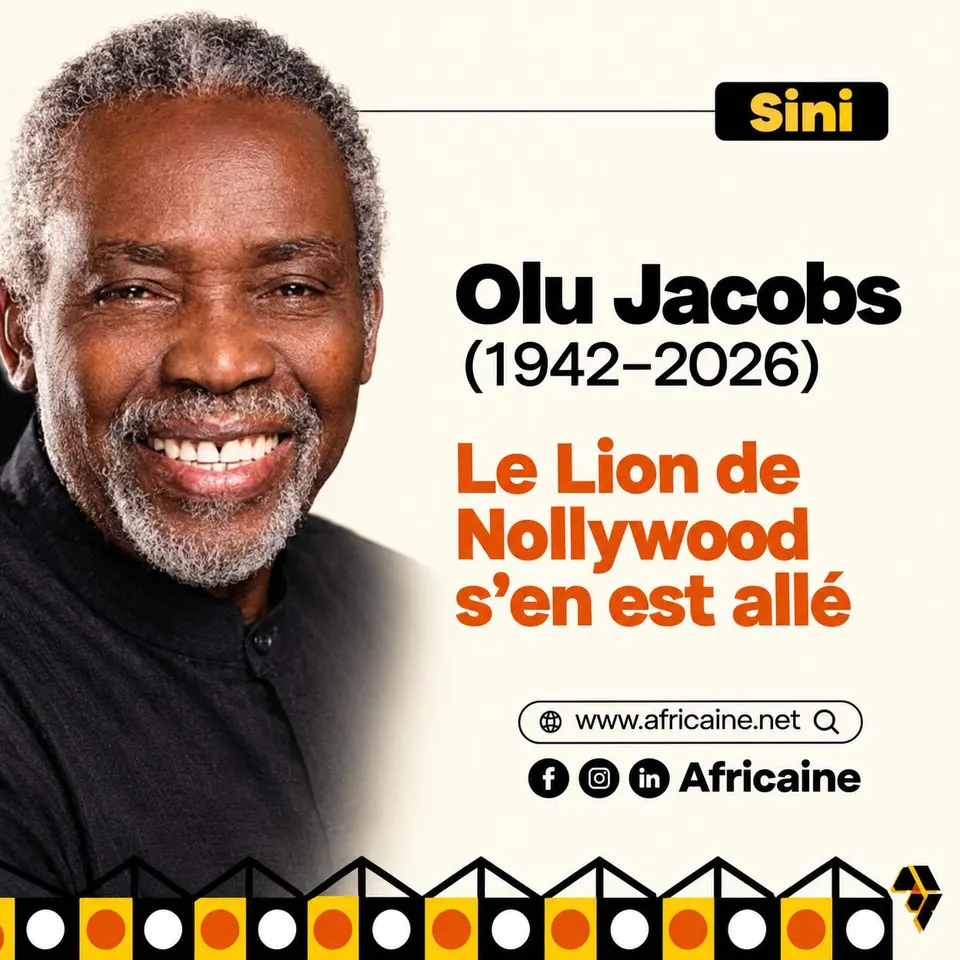
His name was Oludotun Baiyewu Jacobs. The world of African cinema knew him simply as Olu Jacobs: the patriarch, the Lion, the father of Nollywood. On 16 September 2026, aged 84, the legend passed away. But his work will never fade.
Olu Jacobs, Kano 1942: the birth of a destiny
Olu Jacobs was born on 11 July 1942 in Kano, in northern Nigeria. His roots, however, lie in the Egba Alake community of Abeokuta, in Ogun State.
He was a child of the north who grew up with the soul of the south-west. This dual belonging shaped, from an early age, a distinctive way of looking at the world.
At Holy Trinity School, Olu Jacobs joined the debating club and the drama group. He was already there, present, magnetic. But it was one particular evening that changed everything.
One night, he attended one of the annual concerts given by the legendary Hubert Ogunde, pioneer of Nigerian theatre, at the Colonial Hotel in Kano. The show went through him like an electric shock. From then on, his mind was made up: he would be an actor.
The road was not without resistance, though. At the time, acting offered neither social prestige nor financial security. Jacobs would later recount, with humour, that he had to buy his father his finest tobacco to persuade him to let him follow this path. Behind the imposing stature of the future Lion, then, was also a determined young man, ready to do anything to defend his dream.
London, RADA: where the Lion learnt to roar
Olu Jacobs never did things by halves. To learn his craft, he chose the best place in the world.
He left for England and joined the Royal Academy of Dramatic Art (RADA) in London. Founded in 1904, RADA is one of the most prestigious drama schools in the world. Its alumni include Peter O'Toole, Anthony Hopkins and Alan Rickman, among others.
There, Olu Jacobs learnt rigour, discipline and the craft in all its depth. He acquired a rare technical mastery that would set his whole career apart.
But training alone was not enough. He took to the stage.
In 1972, he performed at the Crucible Theatre in Sheffield in A Taste of Honey, one of his first notable professional appearances. He thus began his career on the British stage, before Nollywood even existed.
Conquering British television
In the 1970s, Olu Jacobs made his mark on British screens. And that was no small feat.
At the time, Black African actors were fighting to exist in an almost exclusively white television landscape. Yet Olu Jacobs broke through, thanks to his talent, his bearing and his natural authority.
He appeared in cult series: The Goodies, Till Death Us Do Part, Barlow at Large, The Venturers, Angels, The Tomorrow People, The Professionals. He also filmed episodes of 1990, a British science fiction series.
At the same time, he moved into international cinema. He appeared in Ashanti (1979), an adventure film with Michael Caine and Peter Ustinov. Then in The Dogs of War (1980), Baby: Secret of the Lost Legend (1985) and Pirates (1986), Roman Polanski's film.
In short, Olu Jacobs worked with the greats. He was not yet the patriarch of Nollywood. But he was already building the stature that would make him indispensable.
The return to Nigeria: Olu Jacobs comes home
Around 1990, Olu Jacobs returned to Nigeria. His return would transform the Nigerian film industry.
Joke Silva has recalled the sentence that says it all. Back from London, Olu Jacobs is said to have told her as early as 1984: “Joke, I hear a train. The next film industry is in Nigeria.” A visionary intuition, voiced years before Nollywood became the global phenomenon it is today. He had come home not out of nostalgia, but out of conviction.
When he arrived, Nollywood was undergoing a profound change. The video market was booming. Productions were multiplying. But training, on-set discipline and mastery of acting remained major challenges.
Olu Jacobs brought all of that and much more. He brought a presence, a level of demand and a professional ethic that few other actors of his generation possessed. Alongside Pete Edochie, his contemporary, he embodied the generation of founding fathers, the actors who defined the face of Nollywood before the world discovered it.
Over the years, he appeared in more than 120 Nigerian films. Some sources from the Lufodo Group even mention more than 300 productions. Among his most memorable roles: Oloibiri, Dry, The Royal Hibiscus Hotel, Adesuwa, Dancing Heart and Heroes & Zeros.
In each of these films, he played figures of authority: fathers, elders, chiefs. Not out of convention, but because it matched what he naturally exuded: a quiet dignity, a depth that commanded attention effortlessly.
Dancing Heart and African recognition
In 2007, Olu Jacobs won the Africa Movie Academy Award (AMAA) for Best Actor in a Leading Role for his performance in Dancing Heart.
It was well-deserved recognition, but also symbolic. The AMAAs, created in 2005 to celebrate the best of African cinema, awarded him their highest trophy at the first opportunity.
In 2011, the Nigerian government also conferred on him the Order of the Federal Republic (MFR), a national honour in recognition of his outstanding services to the film industry.
In 2013 came the Industry Merit Award at the Africa Magic Viewers' Choice Awards. And in 2016, the AMAA presented him, jointly with his wife Joke Silva, with the AMAA Lifetime Achievement Award: the highest distinction in African cinema, at the 12th edition in Port Harcourt.
Olu Jacobs did not merely receive awards. He received the recognition that an entire industry had long been waiting to give him.
To these honours was added a more personal tribute: in 2022, for his 80th birthday, a documentary entitled The Doyen of Nollywood: Celebrating Olu Jacobs at 80 was devoted to him. Colleagues and loved ones describe the man behind the public figure and recall a constant in his work: his attention to the voice.
In an interview with Vanguard, he explained that the voice is the vehicle through which an actor conveys meaning and intention. He added that he constantly worked on his own voice and taught this discipline to his students. For him, speaking was never simply reciting a text. Breathing, rhythm, silence and intonation were all part of the performance.
Joke Silva: a love, a vision, an empire
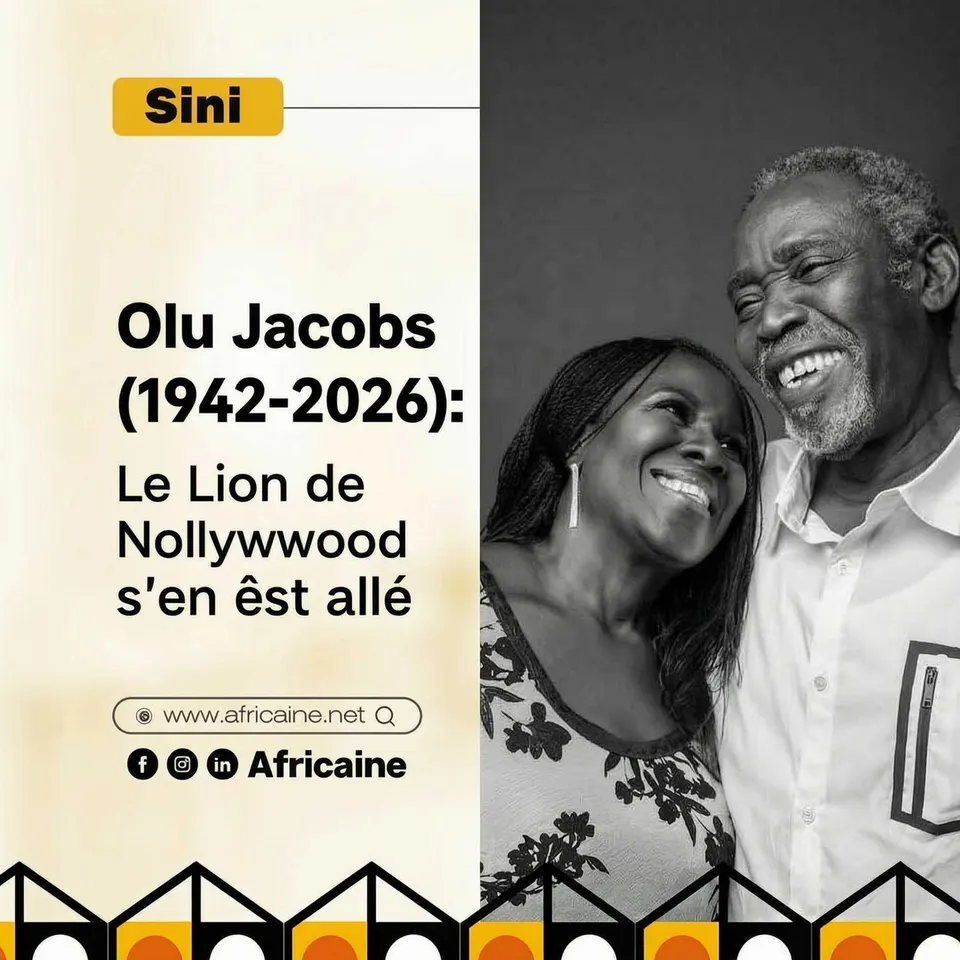
Olu Jacobs and Joke Silva are one of Nollywood's most celebrated couples. But their story is much more than a love story.
They met in 1981 while working on a theatre project in Lagos. According to accounts of their meeting, Jacobs declared almost immediately that this young woman would one day be his wife. Silva, for her part, says she was taken aback by such a direct announcement. A few years later, they married.
Their life together would be marked by joy and by hardship: they lost their first child, a daughter, at the age of ten. The marriage also produced two sons, including Olusoji Jacobs, now Head of Productions at the Lufodo Group.
Together, they founded the Lufodo Group, an organisation covering film production and distribution, as well as the Lufodo Academy of Performing Arts. The academy trains generations of young Nigerian actors to rigorous professional standards.
The name Lufodo is a contraction of their respective names: Ludotun, Folusho (Joke's stage first name) and Dosumu (Joke's family name). A foundation literally built from their two identities.
His family announced his death by hailing him as “The Lion of Lufodo”. That title says it all: the man, the institution, the legacy.
Illness, dignity and a love that endures
In his final years, Olu Jacobs battled a cruel illness: Lewy body dementia, a neurodegenerative disease that profoundly affects memory and personality.
In 2021, rumours of his death spread on social media. They proved false, and Olu Jacobs appeared in public at AFRIFF in November 2021, where he received another Lifetime Achievement Award.
It was his wife, Joke Silva, who, in a moving interview with Chude Jideonwo, described the reality of the illness with rare honesty. She explained that the man she married is largely absent, but that she continues to love him, differently, yet deeply.
Her words touched millions of Nigerians. Not because they humanised a celebrity, but because they spoke a universal truth: great men are men too.
What Nollywood owes the illustrious Olu Jacobs
Olu Jacobs did not just make films. He broke new ground.
Before him, the idea that a Nigerian actor could train at RADA in London, appear in international productions alongside Michael Caine and under Roman Polanski, then return home to build an industry and a school did not yet exist as a model.
He also proved that an African actor could age gracefully and remain artistically relevant as the years went by. In an industry that had long sidelined its elders, he made the presence of veterans at the heart of productions the norm.
Above all, through the Lufodo Academy, he passed on his knowledge. He trained others. He planted seeds in dozens of careers that are flourishing today.
Tributes from an industry in mourning
As news of his death broke, reactions poured in from across the continent and the diaspora.
Funke Akindele wrote: “May his soul rest in peace.” Ini Edo commented: “Rest well, Uncle.” Broda Shaggi wished him eternal rest at the right hand of God. Kehinde Bankole hailed “a beautiful life, a legendary legacy.”
Bukky Wright noted that he leaves an unforgettable legacy in the hearts of film lovers. Atiku Abubakar, former Vice President of Nigeria, called him a cultural icon.
These voices are not only mourning an actor. They are mourning a father of cinema, the man who made the profession respectable, rigorous and proud.
Olu Jacobs: the man who saw it all
Olu Jacobs saw Nollywood being born, growing, doubting itself, reinventing itself and conquering the world.
He started before VHS tapes, before DVDs, before streaming, before Netflix. He lived through every technological revolution in the industry without ever losing what matters most: truth in acting, dignity in the profession, love for African cinema.
Today, filmmakers such as Genevieve Nnaji, who took Lionheart all the way to Netflix and to the doors of the Oscars, are walking a path that Olu Jacobs helped to clear. Today's giants stand on the shoulders of yesterday's Lion.
Olu Jacobs: the Lion of Lufodo
“Oludotun Baiyewu Jacobs (MFR). 11/07/1942 – 16/09/2026.”
That is how his family announced his death. Sober. Dignified. Just like him.
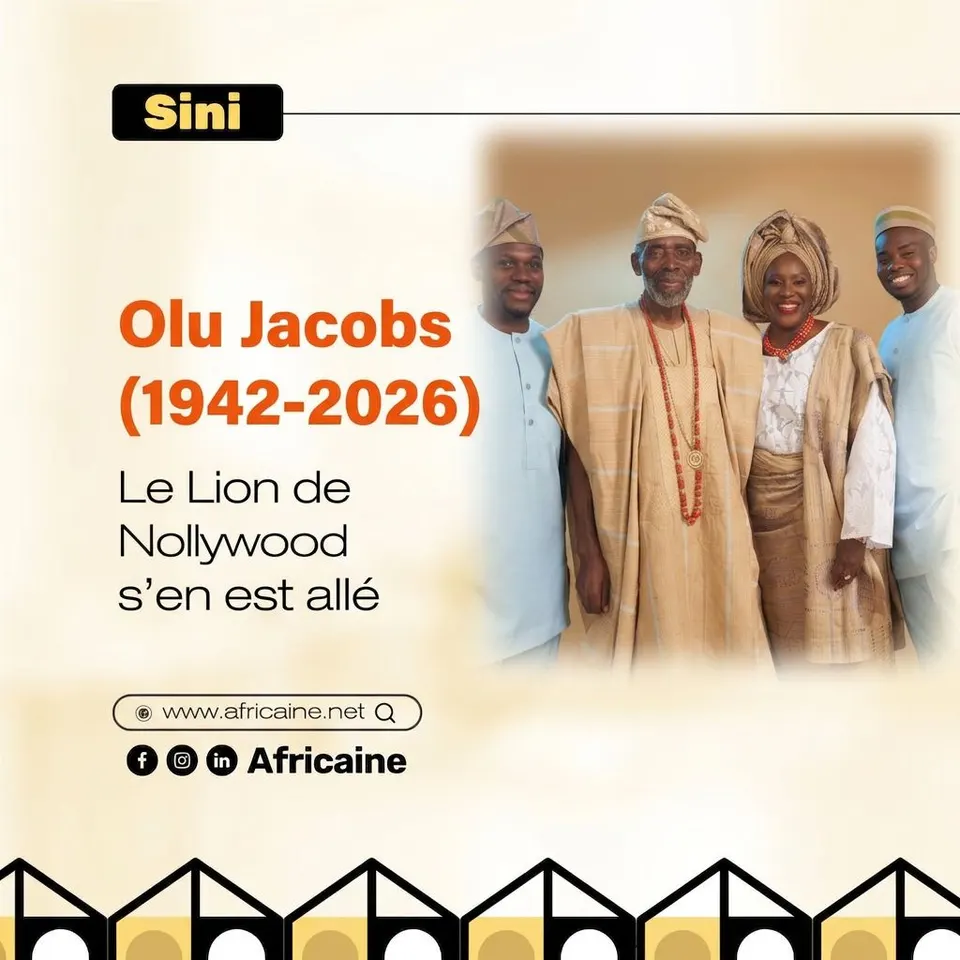
He leaves behind his wife Joke Silva, his two sons, his grandchildren, an academy, a production group, more than a hundred films and an entire industry that owes him part of its soul.
The Lion of Lufodo has lain down. But lions never truly disappear. They become the forest.
Pélagie BLEWUSSI