


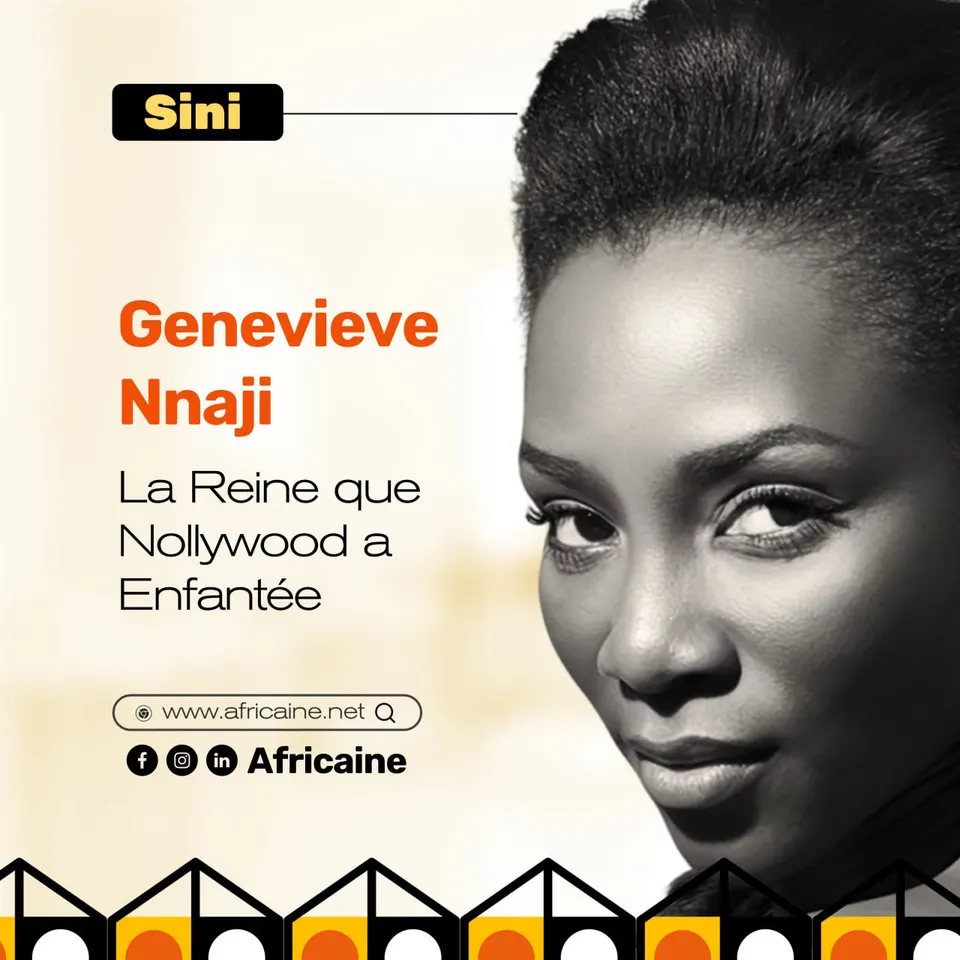
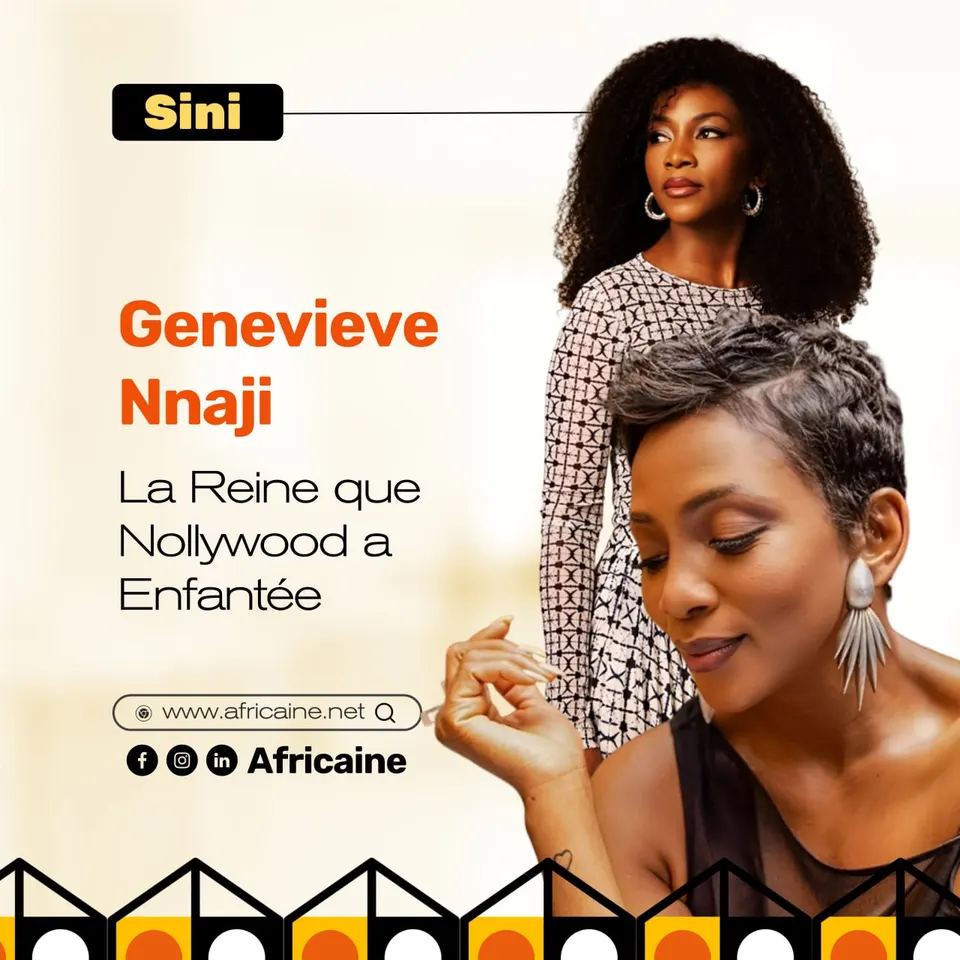
Genevieve Nnaji: The Queen Nollywood Gave Birth To
Genevieve Nnaji, a towering figure of Nollywood: from her debut aged 8 to Lionheart on Netflix, portrait of a queen of African cinema

She started in front of a camera at the age of 8, rode the heights and the blacklists, sold her first film to Netflix and was disqualified from the Oscars for filming Nigerians who speak like Nigerians. In the history of African cinema, Genevieve Nnaji’s rise in Nollywood is not just another success story. It is a true story, that of a woman who grew up with the industry and forced it to grow up with her.
Mbaise, Lagos, and a camera too soon
Genevieve Nnaji was born on 3 May 1979 in Mbaise, in Imo State, in the heart of Igboland. The fourth of eight children, she grew up in Lagos in a middle-class family, with an engineer father and a teacher mother. A household that valued education and discipline.
But the stage claimed her before the classroom did.
At 8, she made her debut in the television series Ripples, one of Nigeria’s most popular programmes at the time. She also shot adverts for drinks and washing powder brands. The camera did not intimidate her. It seemed made for her.
She went on to study at Methodist Girls College in Yaba, then performing arts at the University of Lagos. It was during her university years that she began going from one casting to the next, not to escape her studies, but because she was already an actress, and everyone was starting to know it.
Genevieve Nnaji’s Nollywood years: when a continent fell in love
In 1998, aged 19, Genevieve had her real baptism of fire in film with Most Wanted. She played one of four armed robbers who pass themselves off as men. The role was daring. The result, unforgettable.
The films came thick and fast: Last Party, Mark of the Beast, Ijele, an epic saga that remains, for many, one of her finest performances. Then came Sharon Stone in 2002, which carried her fame beyond Nigeria’s borders. Director Adim Williams, who worked with her, remembers a young woman who seemed to have been “groomed for stardom” long before she achieved it.
2002 was her year. Hot on the heels of Sharon Stone, she played Esther in the cult film Blood Sisters, then a lovestruck, determined Rhoda in the romantic comedy Keeping Faith, directed by Steve Gukas. Two radically different registers, two convincing performances. She established something essential: she had the range to play anything.
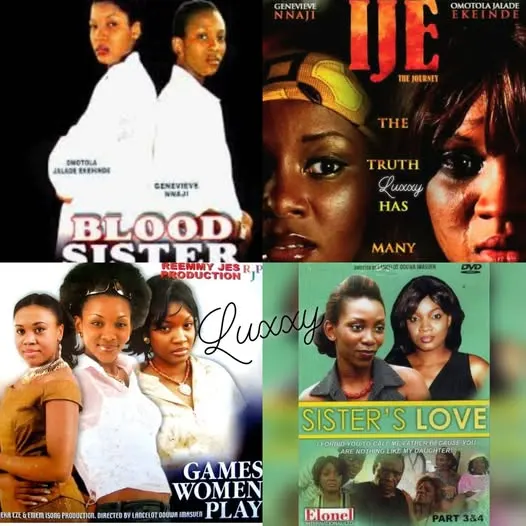
Within a few years, Genevieve Nnaji had appeared in several dozen films. Her name became a guarantee of quality. Her face, the face of an entire generation.
In 2004, she became the face of Lux soap in Nigeria, chosen from dozens of African celebrities after a huge public vote. That same year, she signed with a Ghanaian label and released an album, One Logologo Line. She was everywhere. She was everything.
The 2004 blacklist: Genevieve Nnaji’s years in the wilderness in Nollywood
Great careers always have their darker moments. Genevieve Nnaji’s is no exception.
In 2004, at the very moment her career reached its first peak, the Actors Guild of Nigeria blacklisted her along with seven of her colleagues, accused of charging fees deemed excessive. The blow was brutal. She found herself with no films, no shoots, no immediate recourse.
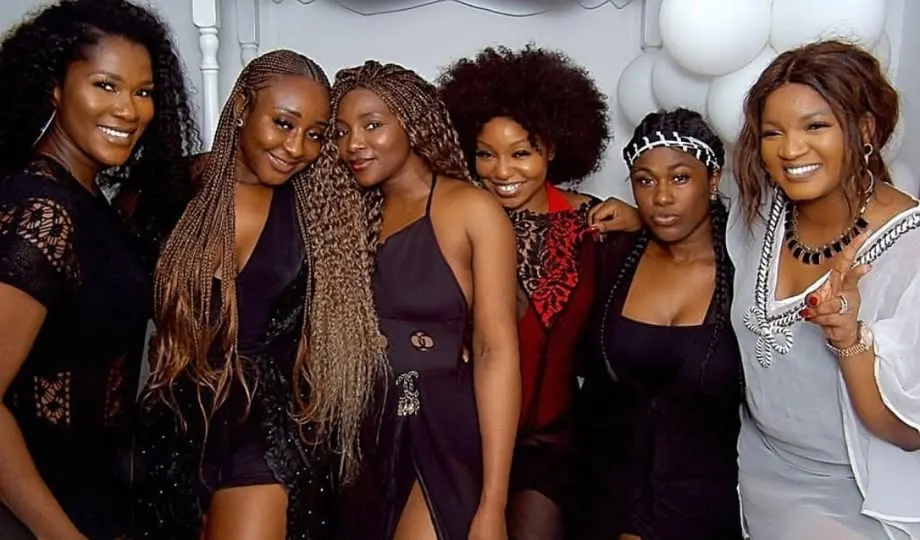
For many actresses, that would have been the end, but for her, it was a transformation.
📌 ALSO ON Africaine.net: Omotola Jalade-E: 30 Years of Nollywood and “Mother’s Love” https://africaine.net/2026/04/03/omotola-jalade-ekeinde-mothers-love-2026-nollywood/
Nnaji turned to music. She stepped back. She reflected. And when independent producers began to emerge in Nigeria, themselves freed from the dominant studios, she returned. Stronger, more selective, more determined to choose her roles rather than simply accept them.
The continent’s response was swift. In 2005, at the very first Africa Movie Academy Awards (AMAA), Genevieve Nnaji became the first winner of the Best Actress award, a prize that would go on to become one of the most coveted in African cinema. The industry had just given back to her, publicly, what some had tried to take away.
Paradoxically, this ordeal is one of the things that made her an enduring icon. She proved that you can fall and come back, not to the same place, but higher.
2009: the world discovers her
America heard about Genevieve Nnaji in 2009. She became the first Nigerian actress to be profiled on The Oprah Winfrey Show, in an episode devoted to the most popular personalities in the world.
This was not a mere anecdote but a signal.
For years, Nollywood had been producing hundreds of films a year. But the outside world barely looked. When Oprah featured Genevieve Nnaji on her show, she was telling the whole world: this woman matters, and so does the industry she represents.
Genevieve Nnaji and Nollywood: exceptional artistic choices
In 2013, the film adaptation of Chimamanda Ngozi Adichie’s novel Half of a Yellow Sun, sparked debate in Nigeria. The public wanted Genevieve Nnaji to play Olanna, the lead role, but she chose to play Mrs Adebayo, a supporting role.
The decision came as a surprise. She explained it with disarming clarity: “I don’t believe in small roles. It was a big film, but above all I felt I owed it to myself, to my people and to my industry to bring this story home.”
This is not modesty. It is vision.
In 2015, she moved into production with Road to Yesterday, a romantic drama about infidelity and marriage, directed by Ishaya Bako. The film won the Best West African Film award at the 2016 AMVCAs. Genevieve Nnaji was no longer just in front of the camera. She was also building what happens behind it.
Lionheart: the first that changed everything
In 2018, Genevieve Nnaji crossed a new frontier by stepping behind the camera.
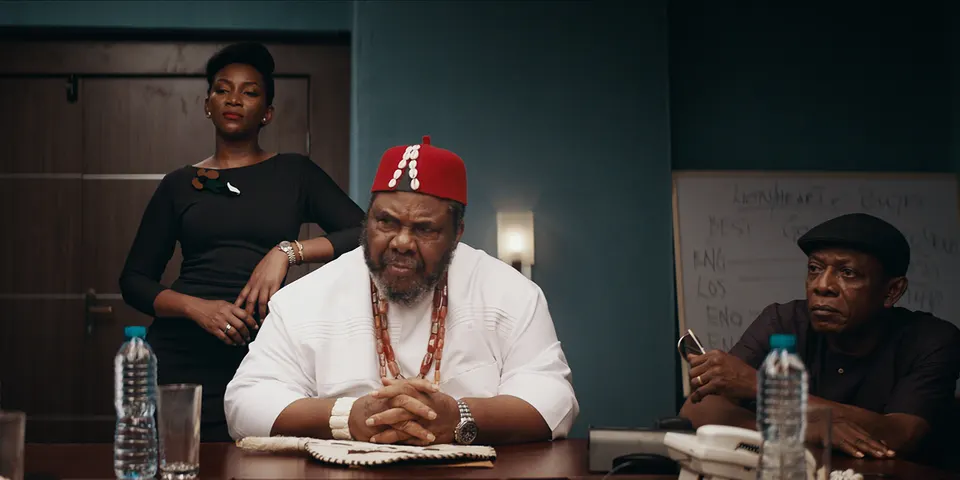
Lionheart, her first film as a director, tells the story of Adaeze, a brilliant woman trying to save the family transport business in a male-dominated Nigeria. She is also its screenwriter and lead actress.
On 7 September 2018, Netflix acquired the worldwide rights to the film. Lionheart became the American platform’s first Nigerian original film. Its world premiere at the Toronto International Film Festival (TIFF) caused a sensation.
Nollywood had just entered another dimension.
The Oscars affair: when disqualification makes more noise than victory
In 2019, Lionheart was selected as Nigeria’s first ever submission for the Oscar for Best International Feature Film. It was a fine story, but it did not last long.
The Academy disqualified the film on the grounds that almost all of its dialogue was in English, whereas the rules require a majority of non-English dialogue.
Genevieve Nnaji’s response has stayed in people’s minds. She said it out loud: “This film represents the way we speak as Nigerians. English serves as a bridge between the 500 languages spoken in our country. We did not choose who colonised us.”
Director Ava DuVernay publicly came to her defence. The controversy set social media ablaze around the world. And what could have been a mere administrative setback became a global debate on colonialism, linguistic identity and the arbitrary rules of Western cultural institutions.
Paradoxically, the disqualification made Lionheart and its creator even more visible.
The legacy: Genevieve Nnaji’s impact
Genevieve Nnaji is not merely an actress who has done well. Genevieve is an architect.
The actress launched St. Genevieve, a fashion line part of whose profits fund orphanages. She set up her own foundation, which supports disadvantaged children through their schooling, and signed with United Talent Agency (UTA) in Hollywood, opening an international path for African talent. The Queen proved that an African film could exist on Netflix, and that others could follow her there.
Nigerian producer Kenneth Gyang put it plainly: Genevieve’s deal with Netflix opened up the possibility that money could come from elsewhere. “Netflix has high standards. Now producers know that if it’s really good, they can sell it.”
That is the real legacy of an icon. Not just what she does, but what she makes possible for others.
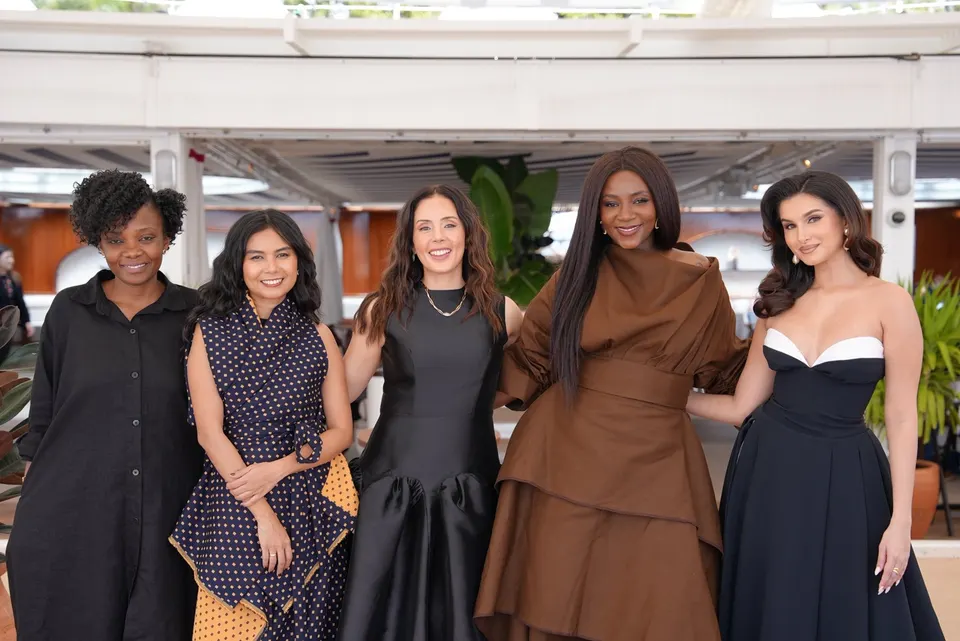
In 2025, the Red Sea Film Foundation honoured her at its annual Women in Cinema gala, held at the Hôtel du Cap on the Côte d’Azur, on the sidelines of the 79th Cannes Film Festival. The event celebrates pioneering women from the Arab world, Africa and Asia. Genevieve Nnaji was among the honourees, recognised for who she is: an actress, producer, director and a leading figure of African cinema.
It was her first time at Cannes. And she did not leave the experience empty-handed.
What she says without speaking
Genevieve Nnaji is known for her discretion. She does not court scandal. She does not feed rumours. Her daughter, Chimebuka, grew up far from the spotlight.
And yet her very existence is a manifesto.
This gifted woman grew up in a Nollywood that produced fast, not always well. She held out for quality when it was not the norm, then came through a humiliating sidelining and emerged stronger. She directed a film about a woman in charge, in a society where that is still a struggle, and sold it to the whole world.
Beyoncé celebrated her. Viola Davis praised her. Ava DuVernay defended her. And millions of young African women, from Lagos to Dakar by way of Abidjan, Nairobi and Lomé, look at her and understand that the stage can be theirs too.
The queen needs no crown
Genevieve Nnaji never asked for the title of “Queen of Nollywood”. It came to her naturally, carried by a people who recognise their own story in what she embodies.
A woman who starts at 8, stumbles at 25, is reborn at 30, conquers the world at 40 and keeps going.
At Cannes, she said something simple, with the frankness that is her hallmark: “The next time I come here, it will be with a film. It’s kind of my dream, you know, so it’s very important to me.”
The dream is set. The story is not over.
Pélagie BLEWUSSI