



West African Soumbala: The Ancestral Superfood
Discover West African soumbala: its nutritional virtues, the secrets of how it is made and the benefits of African cuisine's star condiment.

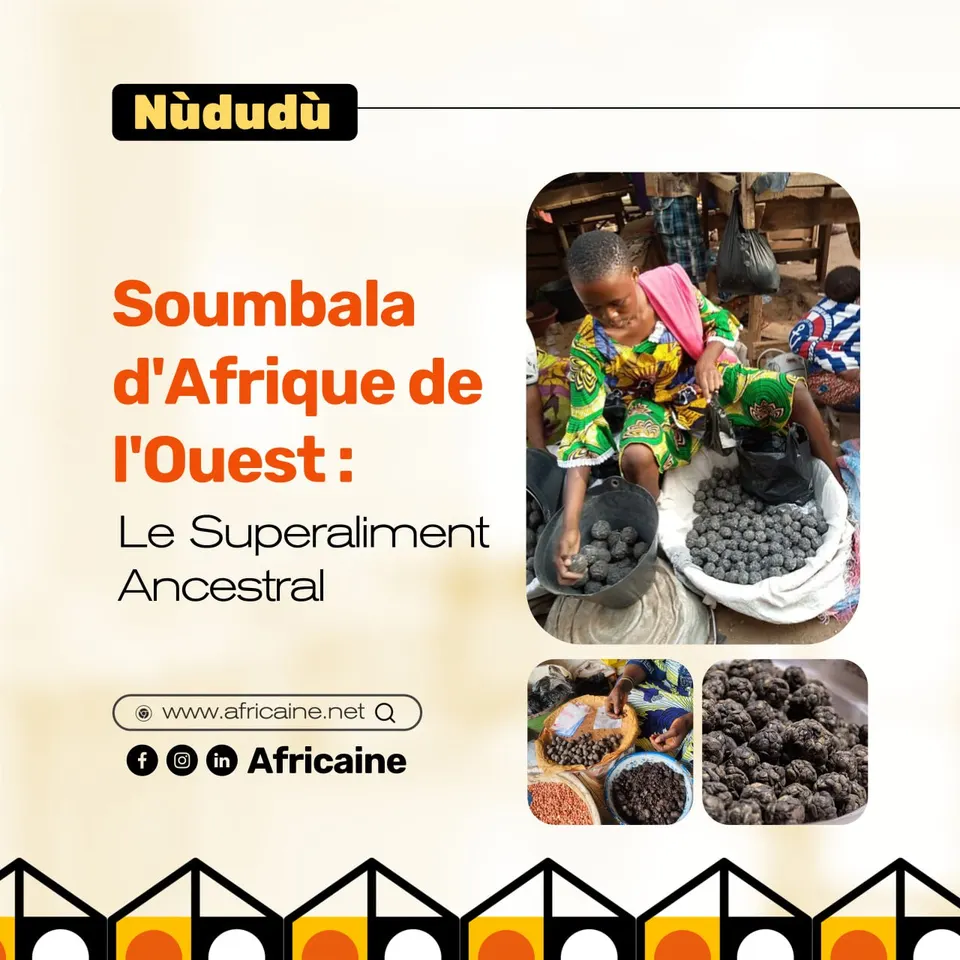
It has a pungent character. It is brown, sometimes black, often rolled into little balls. Yet in family kitchens it is as precious as salt. West African soumbala, often described as “African mustard” or “traditional mustard”, is one of the best-kept secrets of the continent’s cuisine. Which is why it is high time it was given its due.
One ingredient, a thousand names across the continent
To begin with, the condiment goes by a different name almost everywhere, which is in itself a fascinating lesson in the cultural richness of the region.
In Bambara, in Mali, it is called soumbala or sumbala. In Wolof, in Senegal, on the other hand, it is nététou. Likewise, in Fon-gbé, in Benin, it is known as afitin, and without the final “n” next door in Togo (afiti in Ewe and tchotou in Kabye), while the Igbo of Nigeria say dawadawa and the Yoruba call it irú. From Niger to Guinea-Bissau, and from Burkina Faso to Ivory Coast, this ingredient crosses borders without a passport.
In short, the presence of soumbala across West Africa shows just how much it belongs to everyone. A different name in every language, but one and the same culinary truth.
Born of a sacred savannah tree
It all begins with the néré (Parkia biglobosa), a majestic tree of the Sudanian and Sahelian savannahs, also known as the African locust bean tree.
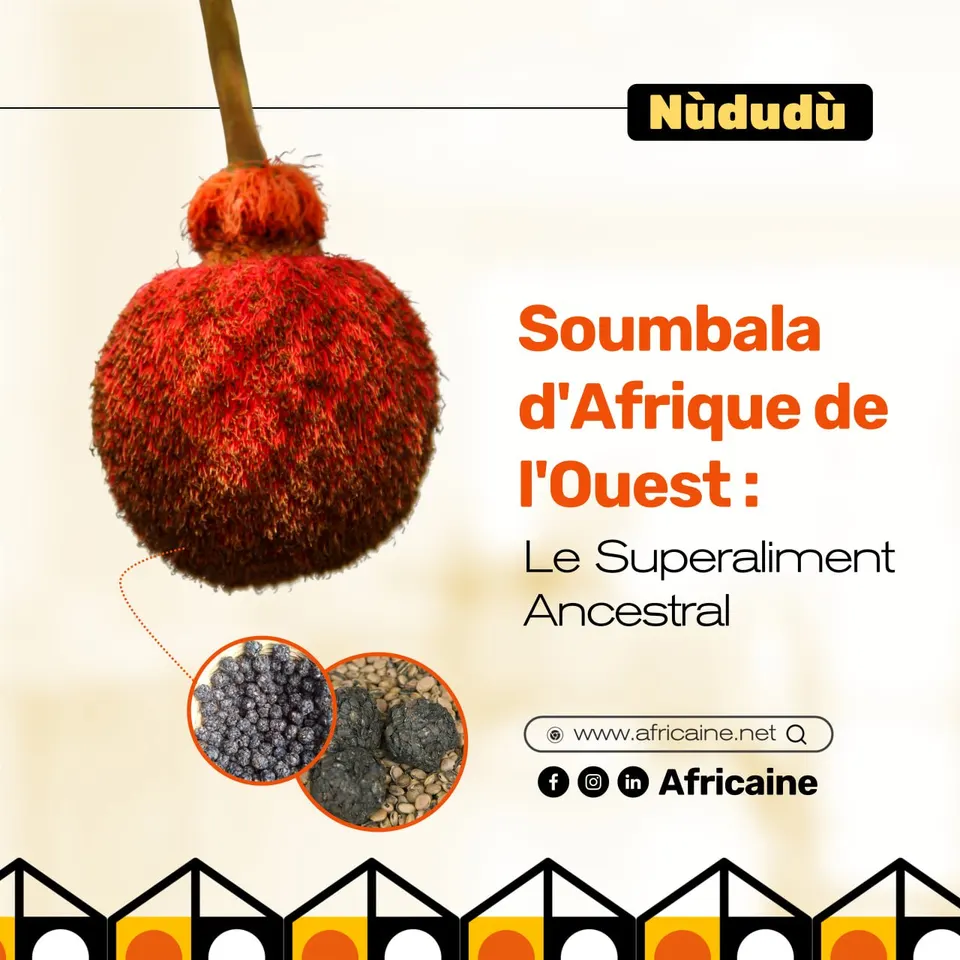
This is no ordinary tree. In many communities, cutting down a néré without good reason is firmly condemned, because the tree feeds, protects and provides an income. Its sweet yellow pulp, for instance, is used as flour or porridge, while its black seeds become the coveted condiment.
The product is therefore born of an act of deep respect for nature. Even before it reaches the sauce, it already carries a genuine philosophy.
Making soumbala in West Africa: patience and ancestral know-how
Turning a néré seed into soumbala takes time, skilled hands and knowledge passed down from generation to generation.
The process follows several exacting stages. First, the seeds are boiled for a long time to soften them. Next, the hulls are carefully removed. Then comes fermentation, several days under controlled conditions, which produces the beneficial bacteria responsible for the characteristic smell and for the product’s full aromatic depth.
Yet it is this fermentation that sometimes puts the uninitiated off. And it is precisely what gives the ingredient all its culinary value. At first the smell is strong, sometimes startling to newcomers. But during cooking it is magically transformed. It blends in, mellows and disappears into the dish, leaving only its soul behind: an incomparable umami depth.
Finally, the product is sold in several forms: as balls, as a powder, fresh and moist, loose or pressed into cakes, and increasingly in modern packaging too. Although their textures differ, each of these forms has its uses and fully deserves a place in every kitchen.
Africa’s finest ancestral stock
That is sometimes what it is called, and the nickname is thoroughly deserved.
Better than industrial stock, it lifts sauces, soups and stews. It adds body, depth and that rounded flavour you cannot quite name but recognise instantly. Unlike shop-bought stock cubes, it contains no additives, no chemical flavour enhancers and no added salt.
In reality, it is a natural, age-old flavour enhancer, born of a tree and of a human craft that is distinctly a women’s one. Nothing more.
Today, in kitchens in Burkina Faso, Senegal, Mali and Benin, it is crumbled straight into the sauce as it cooks. A single pinch is enough to turn a flat broth into something deep and almost meaty, even without any meat.
The benefits of West African soumbala: what science confirms
Tradition has always known it, and now science confirms it.
This seasoning is a genuine, unassuming nutritional powerhouse. According to FAO data, 100 grams provide 432 calories, 36.5 grams of plant protein and 378 milligrams of iron. It also contains healthy fats, vitamin B2, vitamin PP (niacin), calcium and phosphorus.
With 30 to 40% protein, it ranks among the richest plant foods in the world, comparable to soya but without the controversies that come with it.
What is more, its fermentation produces beneficial bacteria similar to those found in yoghurt or kimchi. It therefore contributes to cardiovascular health and to the prevention of anaemia, and represents a natural nutritional solution in regions where meat remains expensive.
Irú is an exceptional superfood, even though West Africans never needed anyone to give it that label in order to respect it.
On the plate: how to use it well every day
Happily, the product adapts to every culinary register, and its versatility is one of its greatest strengths.
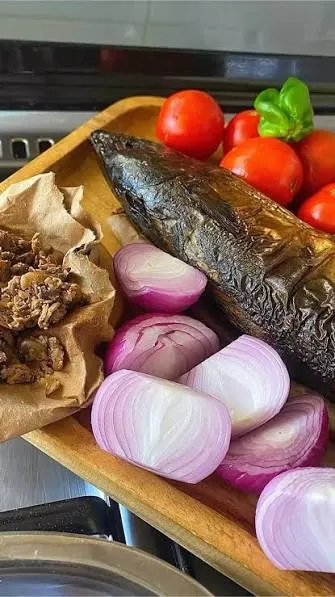
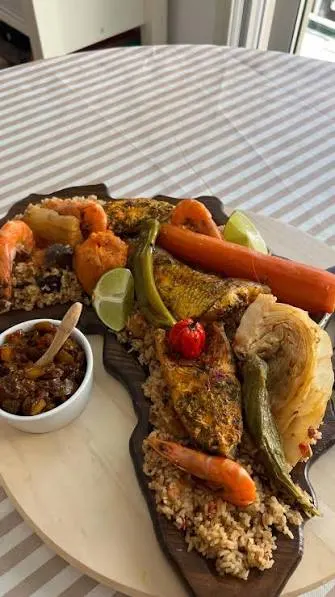
On the one hand, as balls or crumbled into sauces and stews, it enriches broths, okra dishes, groundnut sauces and baobab leaf sauces. On the other, as a powder, it blends in more easily and is ideal for light sauces, marinades and quick seasonings. And as a paste, pounded with oil, vinegar and lemon, with a little cassava flour for smoothness, dawadawa becomes a condiment in its own right, perfect for spreading on grilled meat or fresh fish.
Iconic examples include sumbala rice (in Mooré: Kolgô) with guinea fowl from Burkina Faso, Guinean leaf soups, Senegalese thiéboudienne, Beninese monyo, leaf sauces (baobab, for example) from Togo, and, more and more, modern fusion dishes.
In the end, this traditional seasoning enhances everything: you simply have to learn how much to use.
A condiment, a local economy and women
Behind every ball, there is almost always a woman.
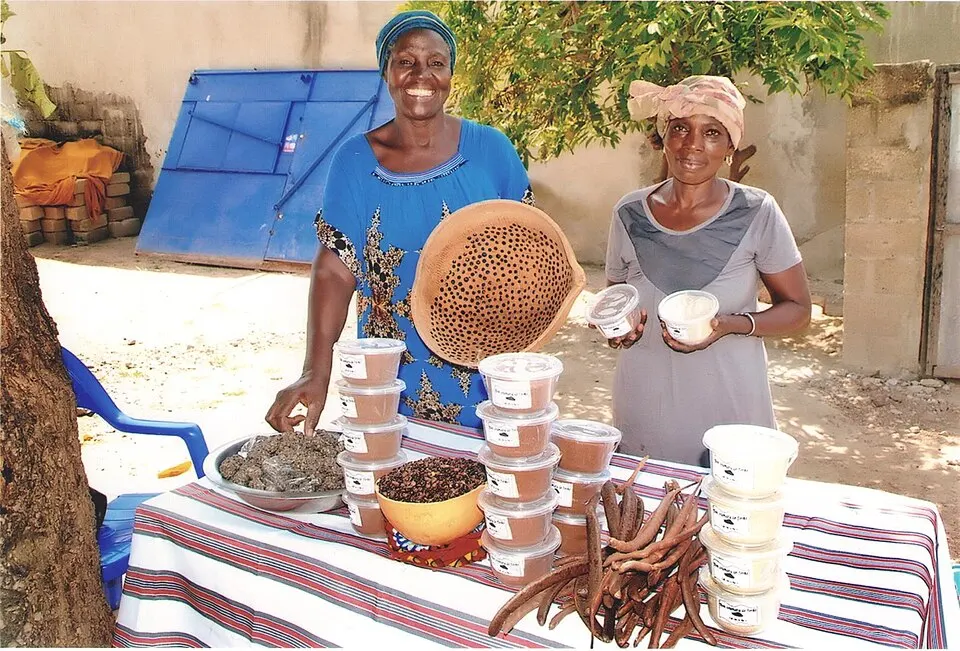
Processing the seeds is traditionally women’s knowledge. In the villages as in the markets, it is women who harvest, boil, ferment, roll and sell. That is why the production of soumbala in West Africa is a local economic sector carried by expert hands that are all too often invisible.
Consequently, eating it also means choosing, with every purchase, to support a local economy, an artisanal craft and a value chain that is 100% African.
What this ingredient reveals about the continent
The continent did not wait for global trends to ferment its food. On the contrary, it has been fermenting for centuries, and this ingredient is the most eloquent proof.
While the world rediscovers Korean kimchi, Japanese miso and kombucha, West African soumbala stands proudly on market stalls, feeding the peoples of the region who cherish it so.
With the same probiotic profile, the same nutritional richness and the same culinary intelligence forged over generations, this condiment will surely take every adventurous palate on a journey.
Pélagie BLEWUSSI