


Journey through Southern Benin: 5 Essential Sites
A journey through southern Benin: from Ganvié to Abomey, discover 5 unique cultural and historic sites that reveal the soul of West Africa.

Benin is at once one of the oldest cradles of West African civilisation and one of its least-known destinations for today’s traveller. It predates the stories told about it. It resists oblivion. So for anyone setting out on a journey through southern Benin, among mysterious lagoons, royal palaces and sacred forests, it awaits only a gaze worthy of it.
Set between Nigeria to the east and Togo to the west, Benin carries a history that spills over its borders. The south of the country, the coastal and lagoon strip where some of the most powerful kingdoms of sub-Saharan Africa were built, holds a cultural heritage of rare density. Here, history is not read in distant museums. It is breathed in the salty coastal air, glimpsed in the lanes of Ouidah and echoes beneath the vaults of the palaces of Abomey.
From the curious traveller to the history buff, from the photographer chasing light to the member of the diaspora on a pilgrimage of identity, southern Benin speaks to everyone with an intensity that leaves no one indifferent. Here are five essential sites you should know about and, if possible, visit.
1- Ganvié, the Venice of Africa
Lake Nokoué: 20 km north of Cotonou
On the slow waters of Lake Nokoué, an entire town chose to live on the water. Ganvié, whose name means “we survived” in the Tofingbe language, is the fruit of age-old collective ingenuity. In the 17th century, the Tofinu people built this lake village to escape the raids of the Dahomey warriors, whose religion forbade them to fight on water.
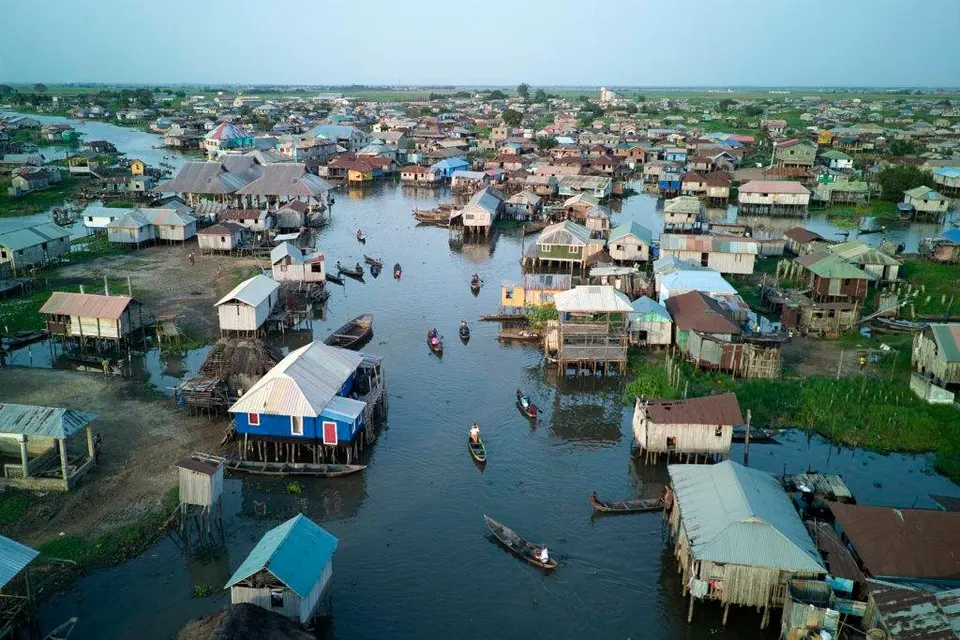
Today, Ganvié is the largest lake town in West Africa, with more than 35,000 inhabitants living in houses on stilts. The floating markets, the pirogues gliding between the homes, the fishing nets hung up at dusk: everything here is a spectacle of authentic life. A pirogue crossing from Cotonou is all it takes to reach this timeless world, where resistance has been transmuted into a way of life.
2- Ouidah, the Crossroads of Memories
Commune of Ouidah: 40 km from Cotonou
Few places on the African continent bear the weight of history so densely. Former capital of the kingdom of Savi, this coastal town was one of the most important slave ports on the Atlantic between the 17th and 19th centuries. Yet Ouidah is not a museum town frozen in pain: it is a living place, inhabited by a deep spirituality and a memory that is actively claimed.
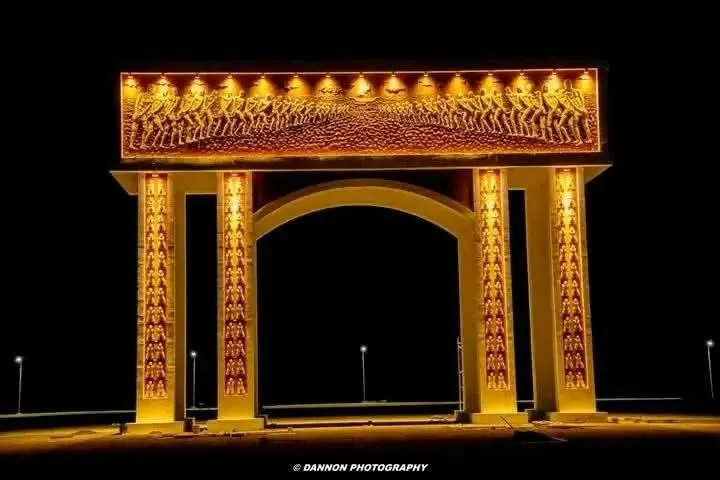
The Slave Route, a UNESCO World Heritage site, stretches four kilometres from the town centre to the sea, lined with sculptures and steles that tell of the unspeakable. At its end, the “Door of No Return”, facing the ocean, is both a monument of mourning and an act of sovereignty over memory. On any journey through southern Benin, this visit is a moment of profound remembrance.
Ouidah is also the world cradle of Vodun, a religion born here among the Adja-Ewe-Fon peoples before crossing the Atlantic to Haiti, Brazil and Louisiana. In January, the town hosts the Vodun Days, the cultural and spiritual gathering par excellence.
3- Abomey: the Royal Stage of a Journey through Southern Benin
Zou Department: 130 km north of Cotonou
Abomey is one of the great capitals of precolonial Africa. Seat of the kingdom of Dahomey for nearly three centuries, the town was ruled by a succession of twelve kings whose political, military and commercial power reached far beyond the borders of present-day Benin. Their history is inscribed in the stone, clay and metal of the royal palaces.
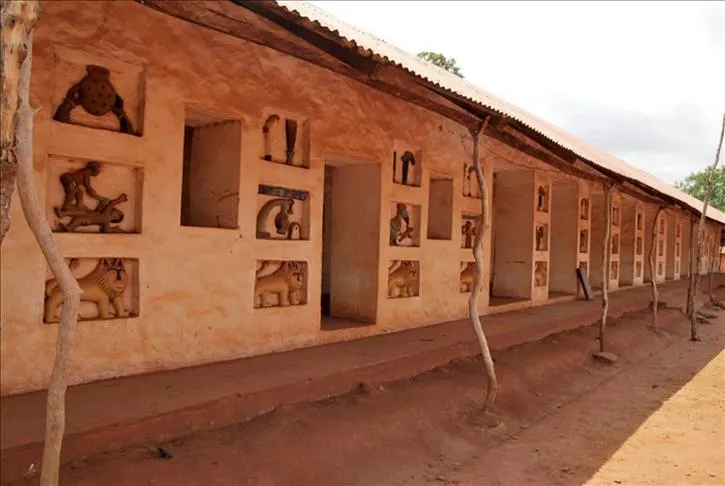
The Royal Palaces of Abomey, a UNESCO World Heritage site since 1985, form an exceptional architectural complex covering several hectares. Their colourful bas-reliefs recount, with almost cinematic precision, the wars, alliances and rituals of each reign. The asen, portable altars of wrought metal dedicated to the royal ancestors, reach a timeless aesthetic sophistication here.
What is more, Abomey is also a symbol of resistance to oblivion: in 1892, before surrendering to French forces, King Béhanzin had part of his palaces set on fire rather than hand them over to the enemy. That sovereign dignity remains at the heart of the town’s cultural identity.
Learn a little more about the soul of Africa through this insightful article!
4- The Sacred Forest of Kpassè in Ouidah
Ouidah town centre
A few minutes’ walk from the Ouidah History Museum lies one of the most enigmatic places in Benin: the sacred forest of Kpassè. According to tradition, King Kpassè, founder of the city of Savi, turned himself into an iroko here, the giant tree the Fon people regard as a dwelling of spirits, to escape a lost battle. The forest is home to sacred pythons roaming free, the same as those of the nearby Python Temple, as well as imposing vodun sculptures and century-old trees whose roots seem to defy the laws of physics.
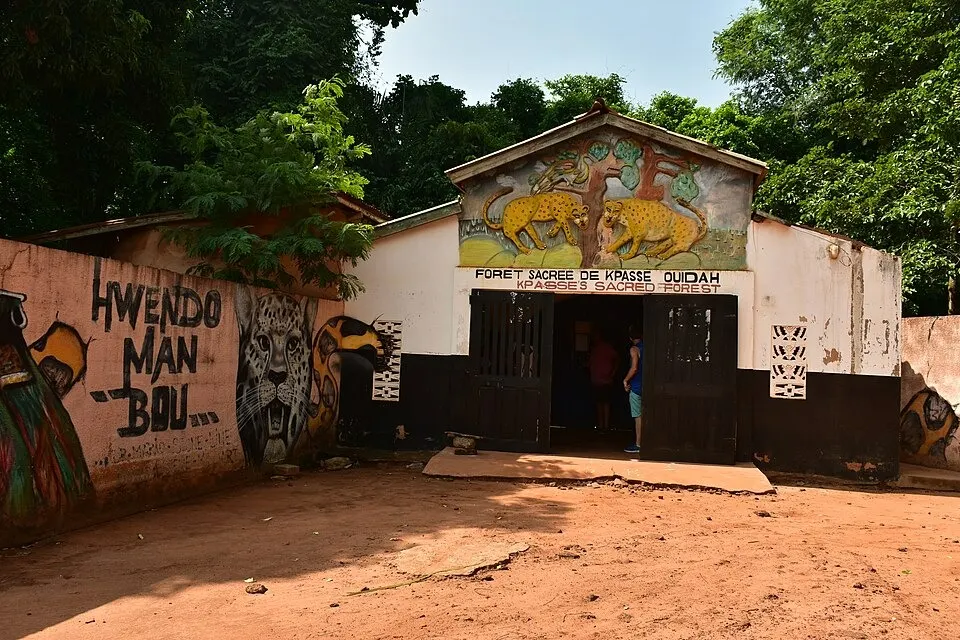
To enter the Kpassè forest is to step into a living cosmogony, where the boundary between the world of the living and that of the ancestors is merely a matter of perspective. This place is also a striking demonstration of how natural and intangible heritage are one and the same in the cultures of the Bight of Benin: the tree is at once a living organism, a spiritual entity and a historical narrative.
5- Cotonou, the Final Stop on a Journey through Southern Benin
Cotonou: Benin’s economic capital
Cotonou is more than a gateway to the wonders of southern Benin. It is a cultural destination in its own right. Benin’s economic capital is a metropolis in permanent creative tension, where colonial architecture rubs shoulders with contemporary art galleries and where the zémidjans, the ubiquitous motorbike taxis that have become a symbol of the city, trace their own particular geography.
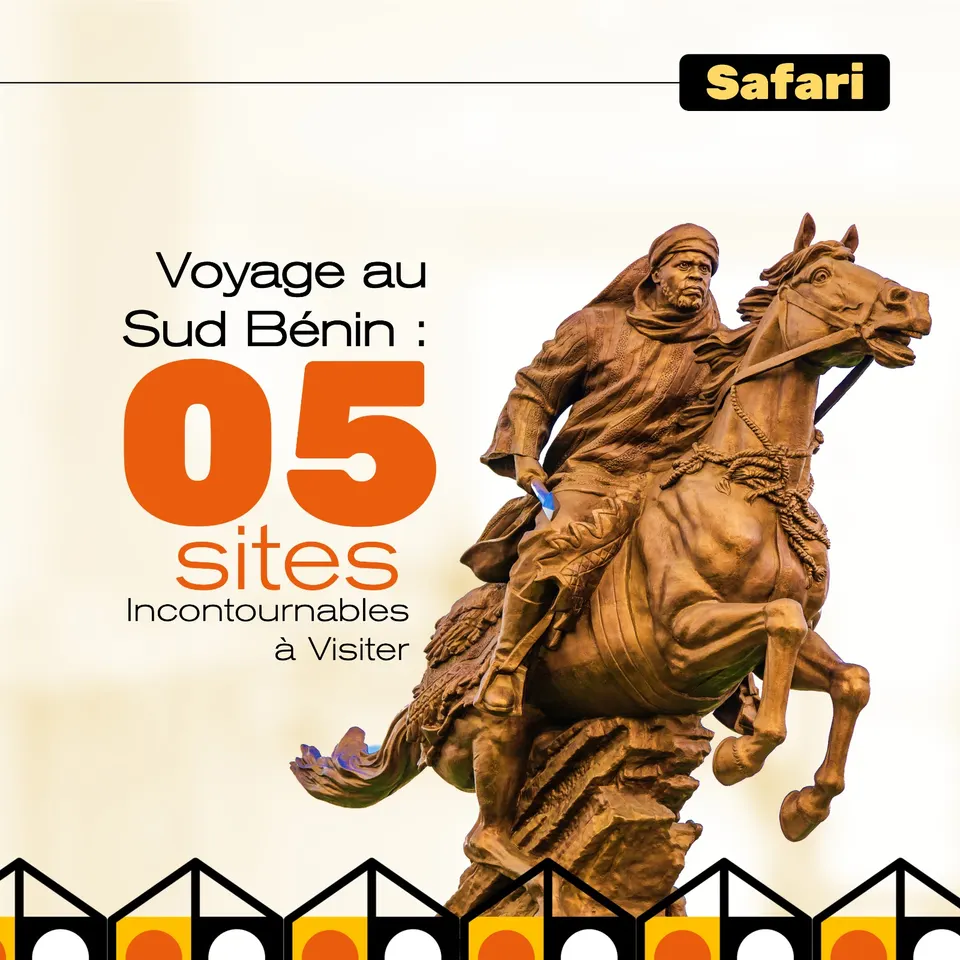
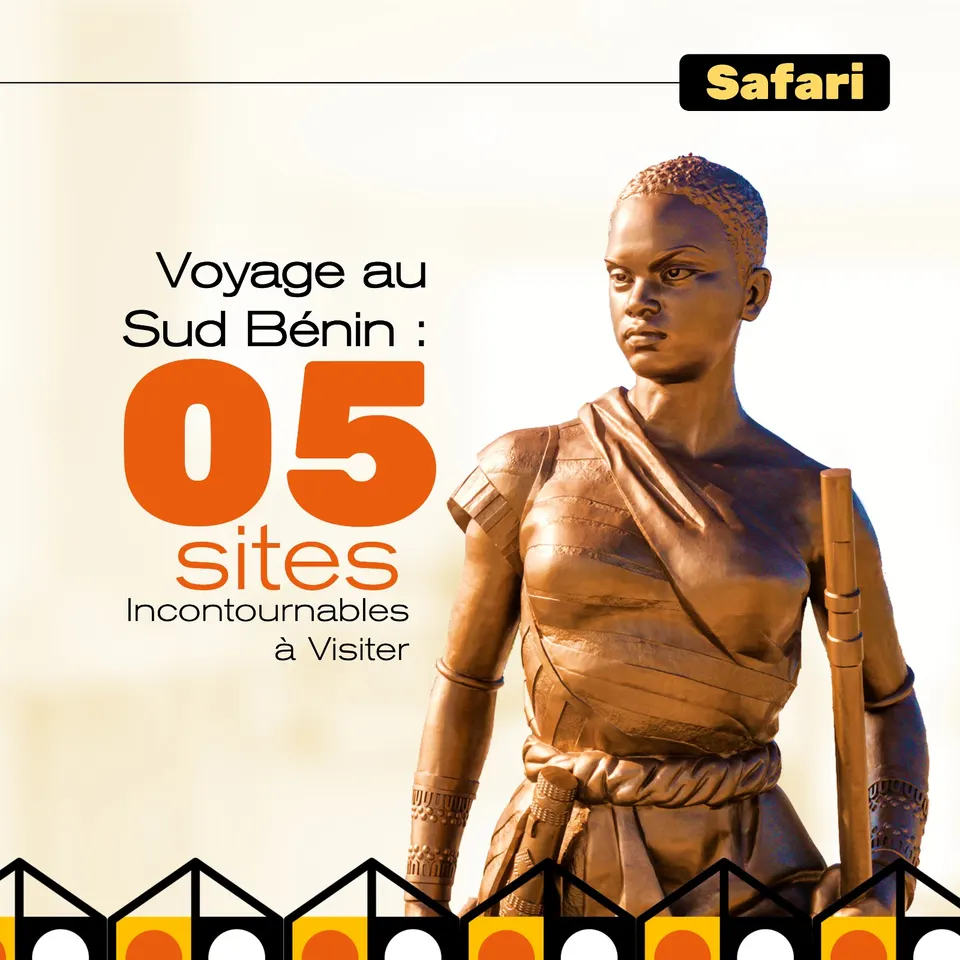
The Place de l’Amazone is an emblematic public esplanade featuring a huge bronze statue 30 metres high excluding its base and weighing 150 tonnes. It was erected in tribute to the Agoodjié, the women warriors of the former kingdom of Dahomey. As for the Place Bio Guéra at the airport roundabout, it is home to a majestic monument celebrating the Wassangari warrior prince Bio Guéra, one of the major figures of African resistance to French colonisation. Finally, the beaches of the Fidjrossè district, crossed by the Route des Pêches, lined with restaurants and emerging cultural spaces, embody the contemporary face of a city reinventing itself without disowning its roots.
In the end, a journey through southern Benin is not a destination. It is a conversation, between the living and the ancestors, between water and land, between what history tried to erase and what memory refuses to forget. The traveller who goes there does not simply come back with photographs. They come back with a transcendent connection.
Pélagie BLEWUSSI