


Halima Gadji (1989-2026): The Odyssey of a Rebellious Icon
On 26 January 2026, Halima Gadji passed away. Africaine.net pays tribute to the legendary actress behind Marième Dial. Find out everything here

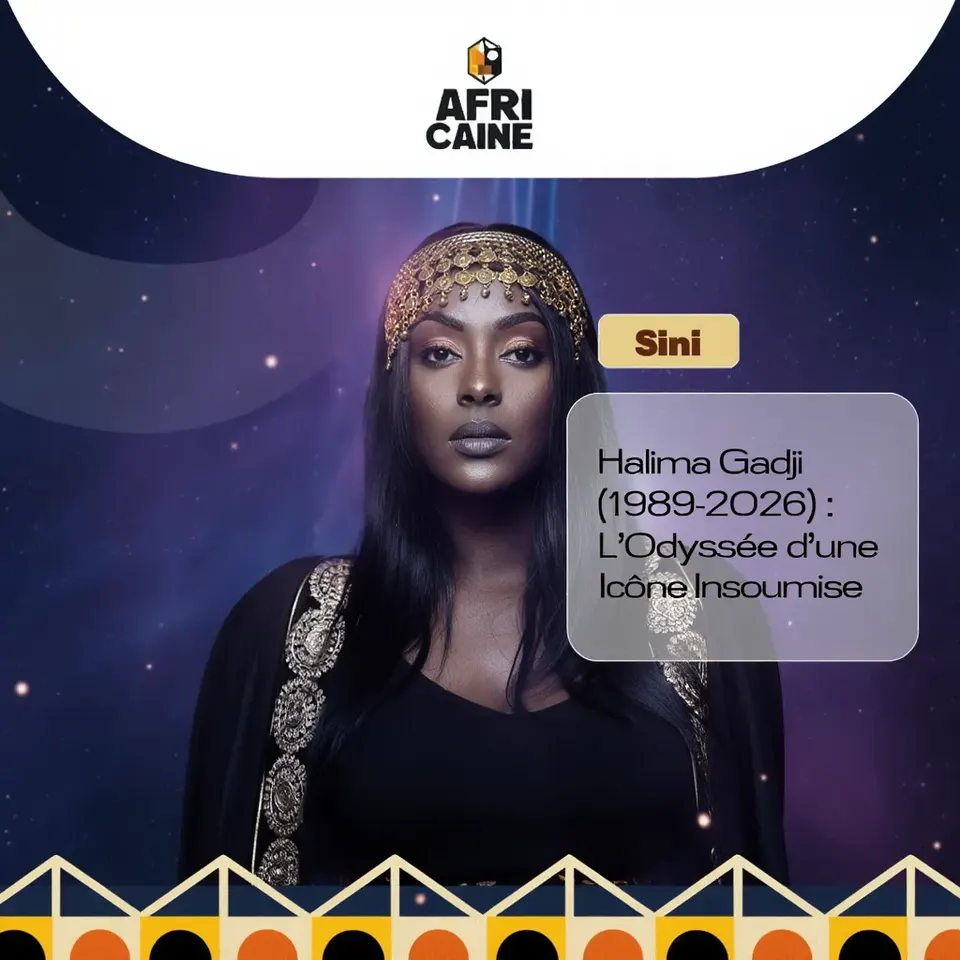
Halima Gadji: The Odyssey of a Rebellious Screen Icon and the Twilight of a Star of African Television
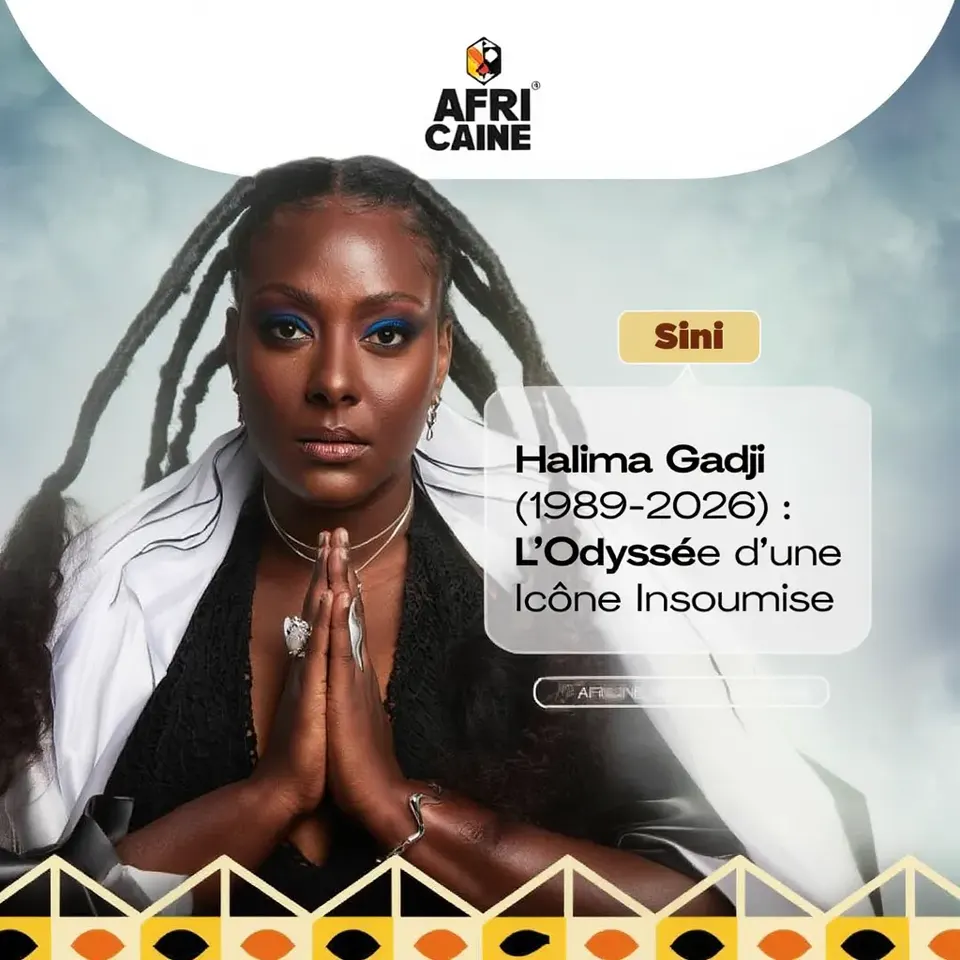
26 January 2026 will stand as a breaking point in the cultural timeline of Senegal and French-speaking Africa. On that Monday, the curtain fell, as brutally as it was unexpectedly, on the life and career of Halima Gadji, the actress who, in less than a decade, had redefined the contours of femininity on screen and given a voice to the voiceless through her personal commitments. She died in Paris at the age of 36, and the woman the public fondly called “Marième Dial” leaves behind an immense void, but above all an artistic and social legacy whose depth is only just beginning to be measured. Africaine.net explores the many facets of this exceptional woman, from her complex roots to her final fight for mental dignity, by way of her aesthetic revolution in pan-African cinema.
The Shock of 26 January: A Cultural Earthquake and a Nation in Tears
The news of Halima Gadji’s death spread like wildfire, plunging Dakar, Abidjan and all her fans into deep shock. Senegal’s Ministry of Culture, Crafts and Tourism was among the first to confirm the news in an official statement, mourning the loss of a “major figure of African series” and of a woman “deeply attached to the human and cultural values of her country”. The statement captured the essence of the national mourning: Halima was not merely an actress, she was a mirror in which an entire generation saw itself.
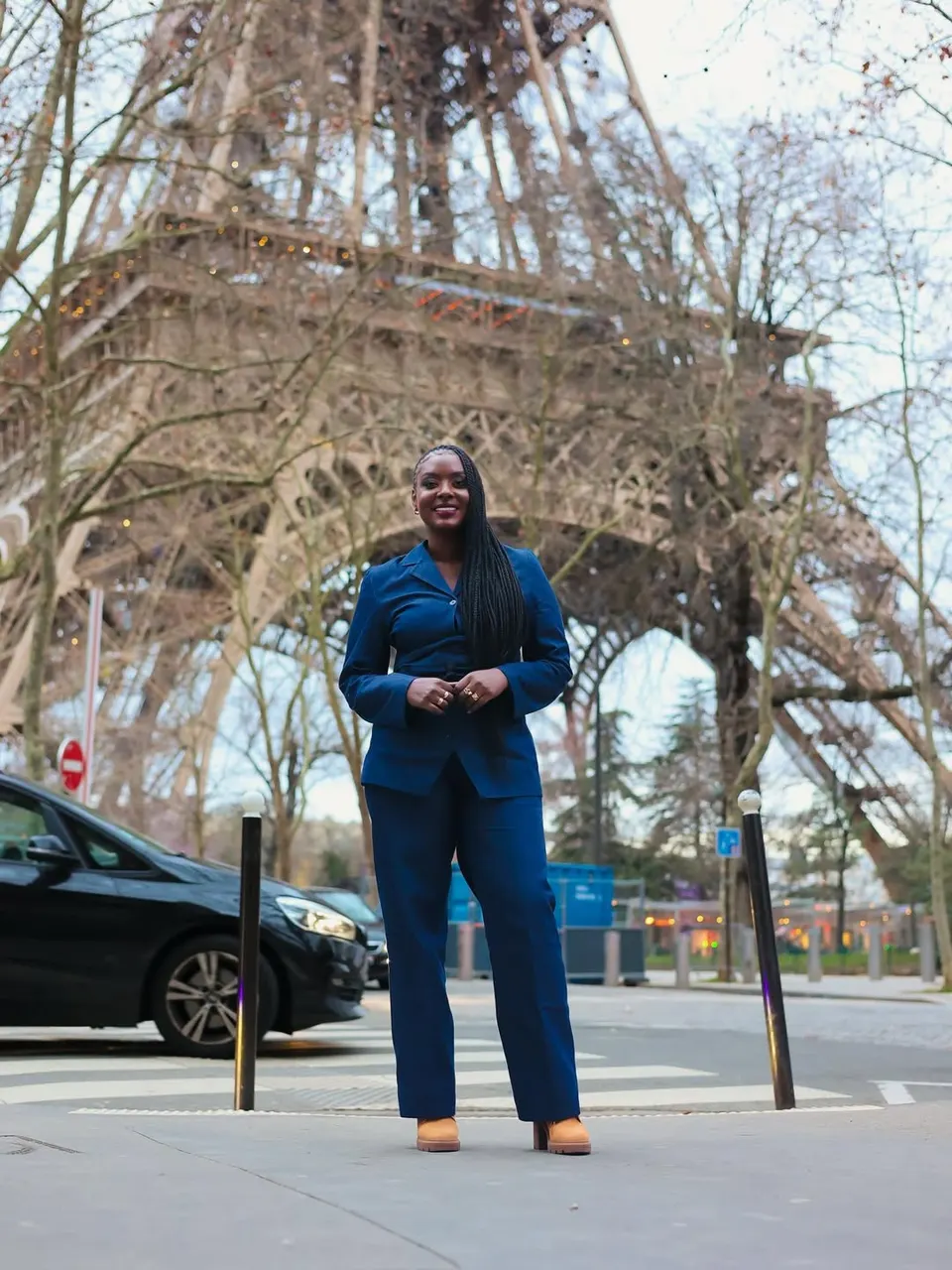
The tragedy is all the more poignant because Halima Gadji was in Paris for what she herself described as a “short stay”. The exact circumstances of her death, initially attributed to a sudden collapse, raised many questions and a wave of emotion on social media, where the actress was a constant presence. Just a few hours before she drew her last breath, she was still posting a casting call on her Facebook page for the second season of the show Nouvelle Reine, proof that, to her very last moments, she was driven by the desire to support the next generation of talent.
Stunned disbelief soon gave way to a simmering anger among some observers. Columnist Arona Niang in particular pointed to a “toxic social climate” and “psychological violence” that had allegedly weakened the actress, recalling that behind the dazzling success of Marième Dial was a vulnerable woman, often subjected to repeated attacks on her private life and her origins. This reading suggests that Halima Gadji’s death was not merely a biological event, but the result of constant pressure from a society that is sometimes unable to protect its most sensitive icons.
The Making of a Plural Identity: Between Médina and Sacré-Cœur
To understand Halima Gadji, one must first delve into the complexity of her roots. Born on 25 August 1989 in Dakar, she was the fruit of a rich cultural blend: a Senegalese father and a mother of Moroccan-Algerian descent. This duality was both her greatest strength and her heaviest burden. Growing up between the working-class streets of the Médina and the more residential atmosphere of Sacré-Cœur, Halima learnt very early to move between several worlds, several languages and several social codes.
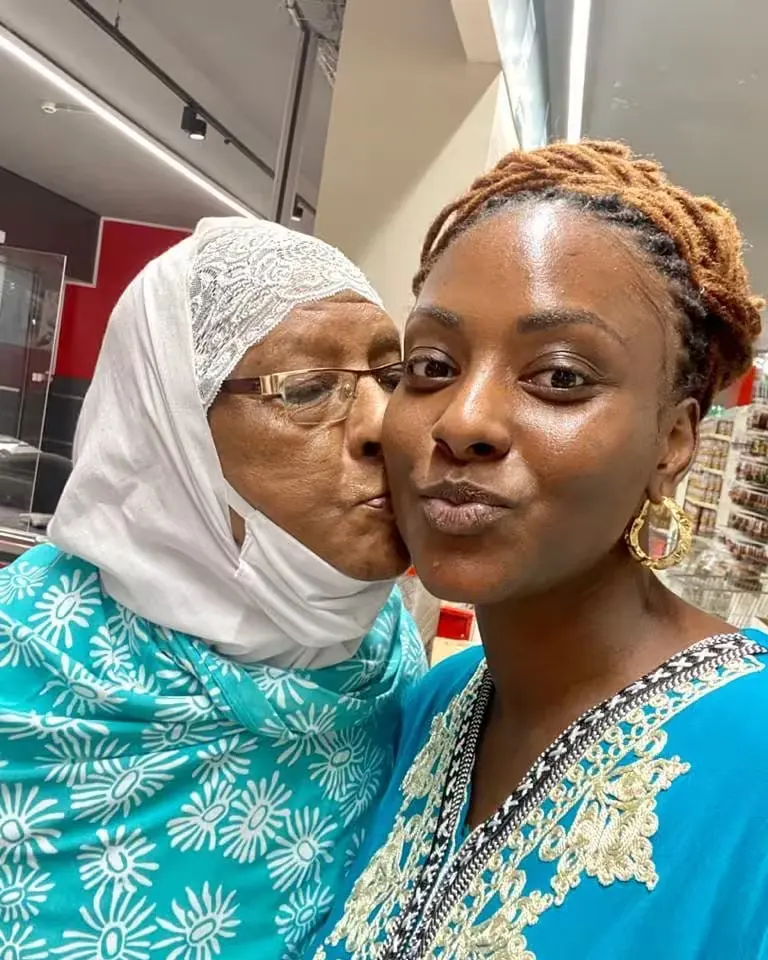
Her childhood was shaped by this hybrid identity which, in a Senegal that could at times be inward-looking, exposed her to forms of xenophobia. She often recounted with emotion how, because she did not fit the classic image of the “mixed-race girl” (light skin, curly hair), she was sometimes rejected by the very people who should have embraced her. This early experience of otherness forged in her a will of steel. Refusing to be pigeonholed, she chose at a very young age to leave mainstream schooling, ending her studies in the second year of secondary school to devote herself entirely to her dream: cinema.
The Biographical Pillars of Halima Gadji
This break with school was not a sign of weakness but an act of constructive rebellion. By 16 she was already working, first as a model, then in advertising. It was during these years of learning “on the job” that she acquired the poise and the magnetic gaze that would become her signature. She did not seek fame for the glitter, but for pure expression, believing that her body and her voice were the only tools capable of conveying the storms within her.
The Artistic Rise: From Modelling to the Triumph of Marième Dial
Halima Gadji’s screen career is a lesson in patience and perseverance. Far from overnight success, she climbed the ladder with quiet rigour. Her first notable appearances came in productions such as Tundu Wundu in 2015, directed by Abdoulahad Wone, then in Seuy Bi 2.0 between 2017 and 2019. But it was with the crime series Sakho & Mangane, broadcast on Canal+ and Netflix, that she began to reach an international audience. Playing Awa, she proved that she could move beyond domestic roles and take on darker, more complex fiction.
However, 2019 marked an irreversible turning point. The launch of the series Maîtresse d’un homme marié by Marodi TV propelled Halima Gadji to continental superstardom. The character of Marième Dial, which she very nearly turned down because she found it too “haughty” and far removed from her personal values, became a sociological phenomenon. Marième Dial is not simply a mistress; she is the symbol of a Senegalese woman who owns her desire, her financial independence and her contradictions.
Filmography and the Evolution of Her Roles
- 2015: Tundu Wundu: her first significant steps in national fiction, where she already revealed great sensitivity.
- 2017-2019: Seuy Bi 2.0: the role of Aïcha made her face familiar in Senegalese homes.
- 2018-2020: Sakho & Mangane: a successful foray into genre series with a pan-African dimension.
- 2019-2021: Maîtresse d’un homme marié: worldwide recognition. She played Marième Dial, a role that earned her the Sotigui for Best Actress in 2020.
- 2022: Le futur est à nous: she played Aby Konan in this series shot in Ivory Coast, confirming her status as an actress who crosses borders.
- 2025-2026: Bété Bété: her eagerly awaited return to the small screen as Deguene Sow, once again captivating viewers just before her death.
The success of Marième Dial nevertheless came at a psychological cost. Halima often spoke of how hard it was to live in the shadow of that character. The public, unable to tell fiction from reality, sometimes confronted her aggressively in the street, judging her for her character’s actions. This confusion between actress and role added to her mental load, forcing her to withdraw to protect her mental health, a subject that would become the great cause of the last years of her life.
The Fight Against the Invisible: Mental Health and Civic Engagement
If there is one area in which Halima Gadji left an indelible mark, it is mental health. In an Africa where such issues are still largely taboo, often relegated to the realm of the mystical or of “witchcraft”, Halima chose the path of public vulnerability. In 2021 she broke her silence with the documentary Don’t Call Me Fire, directed by Oualid Khelifi. In it, she spoke candidly about her childhood traumas, her depressive episodes and her struggle with personality disorders.
Her commitment was not merely aesthetic or cinematic. She founded the association Sama Mental (My Mental Health, in Wolof), which aimed to help people affected by burnout or depression get back on their feet and to fight social stigma. She did not hesitate to denounce conditions of care in Dakar’s psychiatric hospitals, recounting that she herself had been mistreated while committed during a crisis.
Mental Health in Senegal: Halima Gadji’s Diagnosis
Her strength lay in her ability to turn her pain into a “mission”. She said: “I wasn’t born ill; it’s society that gave me this damn illness, and it’s the same society that judges me today.” By speaking openly about her treatment and her moments of weakness, she became an icon of resilience for thousands of young women who recognised themselves in her inner battles.
Motherhood and Sacrifice: Her Love for Anne Rabya
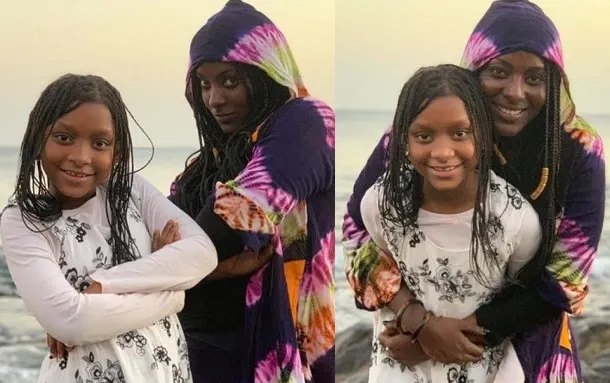
At the heart of Halima Gadji’s turbulent life stood an unshakeable pillar: her daughter, Anne Rabya Gomis. Born in 2010, when Halima was only 21, Anne Rabya was the driving force behind all her sacrifices. With disarming honesty, the actress revealed that she had considered an abortion at five months of pregnancy, fearing she would not be able to provide for the child. Yet she chose life, promising God that she would take care of this “miracle”.
Halima’s public appearances with her daughter were rare but always deeply moving. Whether at Anne Rabya’s first communion or her confirmation, Halima celebrated religious diversity and unconditional love, declaring that “whatever the religion, God is love”. After her mother’s death, witnesses described a “very strong” child, personally welcoming the guests who came to offer their condolences, a worthy heir to her mother’s resilience.
The Industry Legacy: Halima and the Marodi Revolution
Halima Gadji’s death also marks the end of an era for the Senegalese series industry. She was the face of the sector’s professionalisation. Thanks to actresses of her calibre, production companies such as Marodi TV were able to export Wolof and Senegalese realities far beyond the country’s borders. Halima embodied this new generation, able to combine international artistic standards with an immediate closeness to the general public.
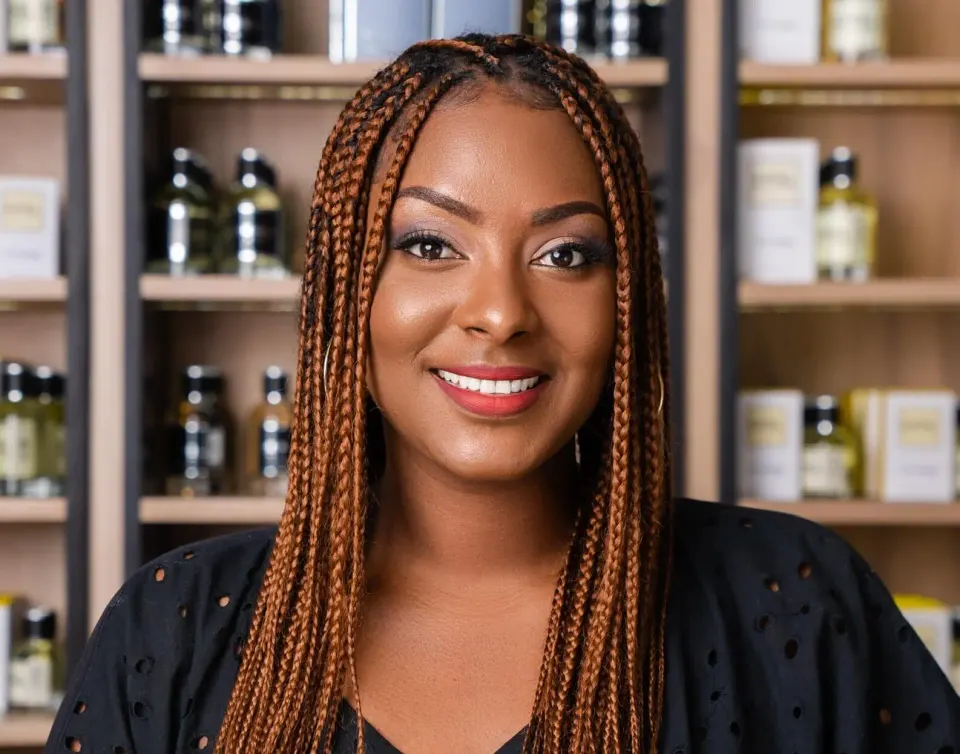
As an influencer and model, she knew how to capitalise on her image to launch her own brand of hair products, Handmade by Halima, and her beauty salon, proving that the modern African artist must also be a seasoned entrepreneur. She also argued that the Ministry of Culture should put “real budgets” in place for cinema, because film does not just sell an image, but “a country’s tourist appeal, its history and its beauty”.
Tributes and Farewells: The Final Journey of the Pen
Halima Gadji’s funeral, scheduled for Wednesday 28 January 2026 in Dakar, will draw an immense crowd. From government ministers to ordinary people who saw her as a sister or a daughter, many will make the journey. The cultural world has paid tribute to an artist who was “committed, free and deeply human”. Figures such as Youssou Ndour, Fatou Jupiter Touré, Mokobé, Adja Nationale, her friends and colleagues Déborah Mutund, Emmanuelle Keita, Muriel Blanche, Coco Emilia and her brother Kader Gadji are mourning a woman who, despite her success, had remained “simple and devoted to her art”.
The singer Mia Guisse, for her part, paid tribute to Halima Gadji (the actress who suffered in silence) with a Hymn of Grief, via Sencover:
An Earthly Chapter Closed With a Prayer
A sentence written by the actress during her lifetime has circulated in recent hours, acting as a final message to her fans: “If I leave tomorrow, I simply ask you to pray two rakkas for me and to forgive me.” This request, marked by great humility, closes the earthly chapter of a woman who spent her life seeking a balance between the glare of the spotlight and peace of the soul.
The Star That Never Fades
Halima Gadji’s death at 36 is a tragedy, but her life is a triumph. In less than two decades of work, she achieved what few artists accomplish in an entire lifetime: lastingly changing the way a society sees itself. Through Marième Dial, she freed women from shame; through Sama Mental, she freed minds from stigma; and through her journey as a mixed-race Senegalese woman, she reminded us that identity is a shifting and proud construction.
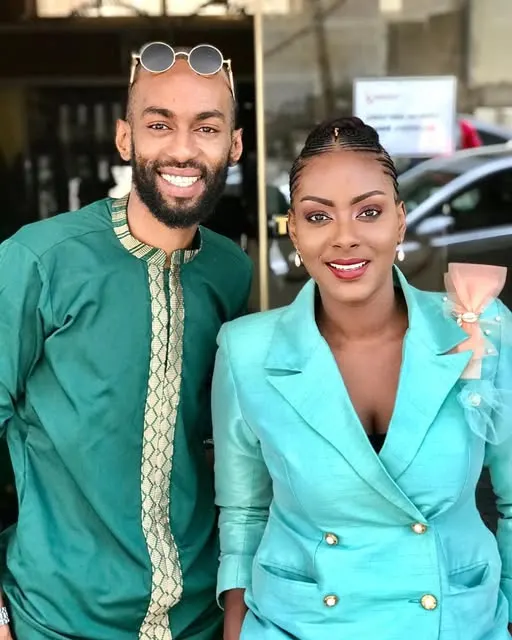
African cinema has lost one of its finest pens, but the work endures. From Sakho & Mangane to Le futur est à nous, by way of the phenomenon that was Maîtresse d’un homme marié, Halima Gadji will go on living on our screens and in our memories. She asked only for forgiveness and a prayer; today Senegal and Africa grant her the immortality reserved for icons who had the courage to live their truth to the very end.
Pélagie BLEWUSSI