

Zaouli vs IShowSpeed: the clash of speeds in Ivory Coast
When the IShowSpeed whirlwind meets the legend of the Zaouli. Discover the secrets of this sacred dance from Ivory Coast.
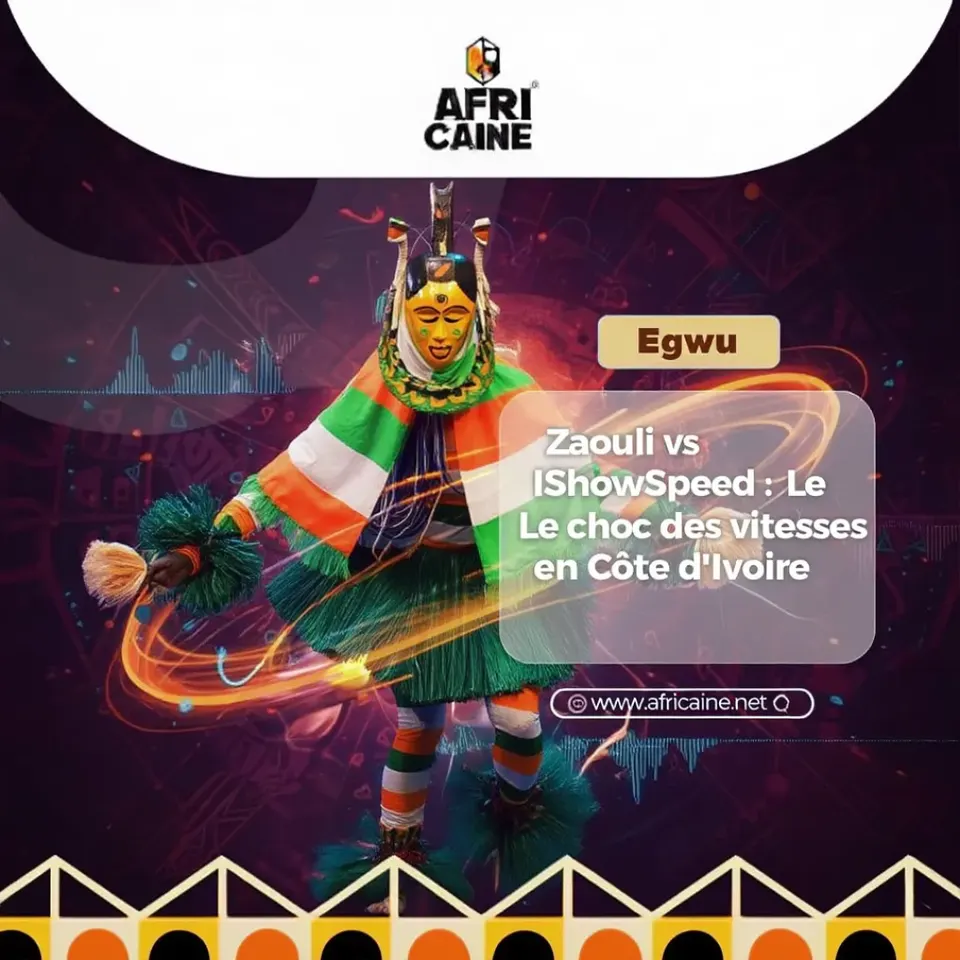
IShowSpeed and the Zaouli: When Global Streaming Bows to the Speed of Ivory Coast
The digital world shook this weekend. IShowSpeed, the YouTube phenomenon with 50 million subscribers, known for his electric energy, finally met his match in the heart of Ivory Coast. But beyond the “clash” of cultures, the event shines a light on one of the most complex art forms in the world: the Zaouli.
1. Engineering the Impossible: The Science of Movement
The Zaouli is not merely a dance of speed or, as it is often nicknamed, the fastest dance in the world; it is a feat of bodily dissociation.
- The principle of upper-body stillness: Unlike urban dance styles, the Zaouli dancer’s torso and head must remain perfectly still, as if floating. This contrasting rigidity throws the frenzied work of the legs into sharp relief.
- The footwork: There are two basic steps: the prokprok (quick, staccato steps) and the flali (smooth, gliding movements). An expert dancer can perform dozens of micro-steps per second, creating an optical illusion in which the feet no longer seem to touch the ground. It was this human “refresh rate” that left Speed speechless.
2. The Origins: Djela Lou Zaouli, Muse of the Gouro People
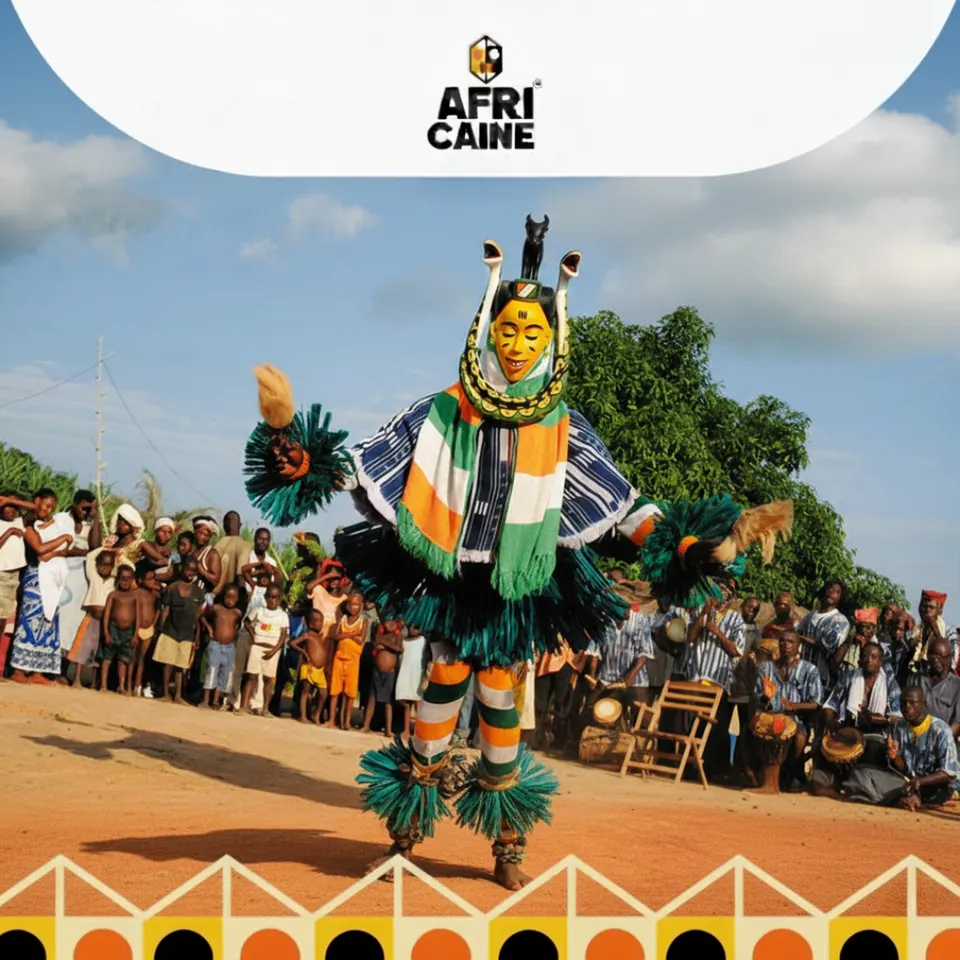
Born in the 1950s in the departments of Bouaflé and Zuénoula, the Zaouli is a creation of the Gouro people. It is an inseparable trio: an emblematic mask, a richly textured costume and a dance of legendary speed. An Ivorian tradition born among the Gouro, it turns every celebration into an unforgettable spectacle.
- The origin of the name: “Zaouli”, or “Djela lou Zaouli”, means Zaouli, daughter of Djela. Legend has it that a sculptor was inspired by the breathtaking beauty of a young girl named Djela Lou Zaouli to create the first mask.
- A tribute to femininity: Although it is danced exclusively by men, the Zaouli is a celebration of feminine grace. Each village has its own mask, with fine features and a carved headdress often topped with totemic animals (hornbill, snake) or scenes from everyday life, symbolising fertility and protection.
A constellation of seven sacred faces
A true spiritual family expresses itself through seven emblematic variants, each carrying its own legend and soul. Among them are figures of timeless feminine grace such as Zahouli Lou Klamin, Zahouli Lou Monhon and Zahouli Lou Gou, which celebrate beauty in its purest forms.
Other masks strike the imagination with their powerful symbolism, such as Zahouli Lou Zaleklou, whose face is adorned with a sparrowhawk seizing a python, a visual allegory of the forces of nature. More striking still, the Zahouli Lou Zamblé surprises with its zoomorphic appearance, sporting a multicoloured face and the twisted horns of the bongo. The lineage is completed by Bongnan Lou Zeli and the enigmatic Mami Watta, testifying to the Gouro people’s ability to weave universal mystical figures into their art. Together, these seven masks form a mosaic of stories that, to the rhythm of the drums, bring the pantheon of the ancestors back to life.
3. The Costume: A Mystical and Acoustic Armour
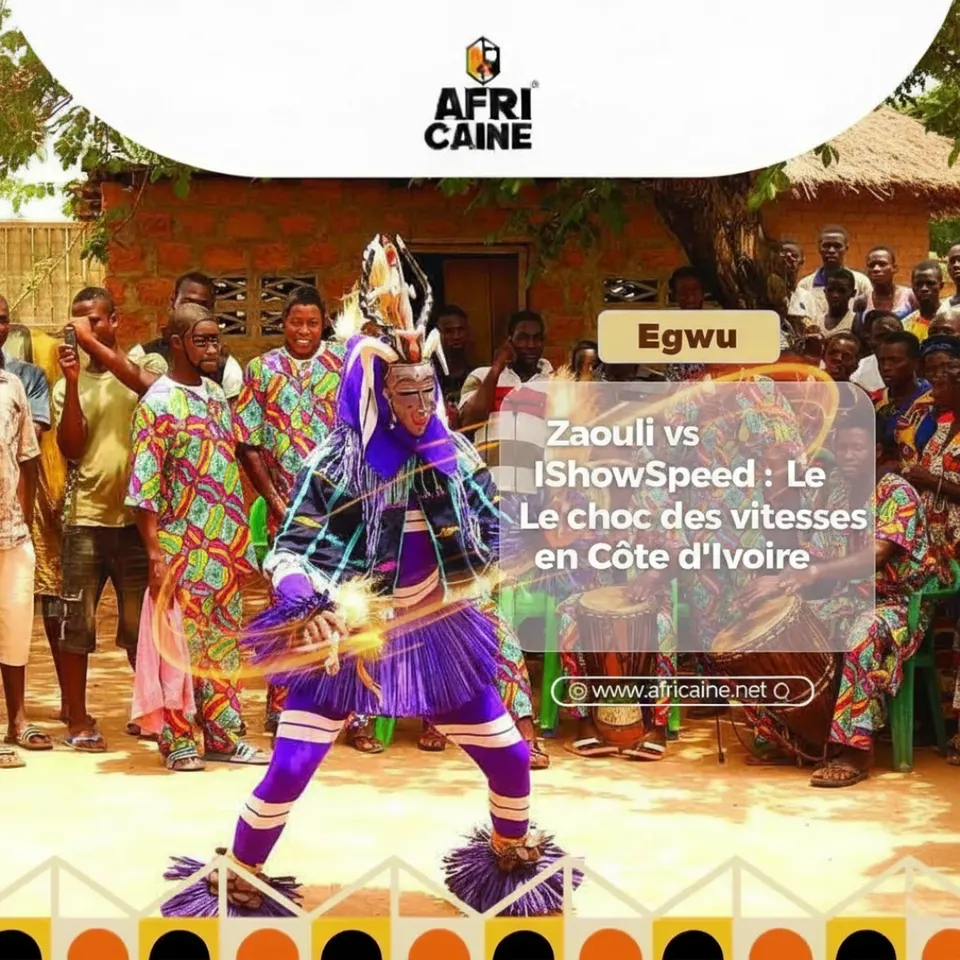
The dancer does not simply get dressed; he equips himself with a multi-layered instrument.
- The Mask: Carved from sacred wood, it is held in place by a leather strap clenched between the dancer’s teeth, forcing him to breathe through his nose in a controlled way, which adds to the athletic challenge.
- The Raffia and the Fabric: The body is covered in a tight-fitting knitted garment, topped with wide wrappers and, above all, dyed raffia fibres. These fibres act as visual “stabilisers”: they amplify the range of movement while hiding the leg muscles to heighten the magical effect.
- The Bells (Essé): Tied to the ankles, they are not there for decoration. They serve as a metronome. If a single step falls out of time with the drum, the sound of the bells instantly betrays the dancer’s mistake before the village jury.
4. The Orchestra: A Dialogue Between Wood and Skin
The Zaouli is a conversation. The dancer does not follow the music; he commands it.
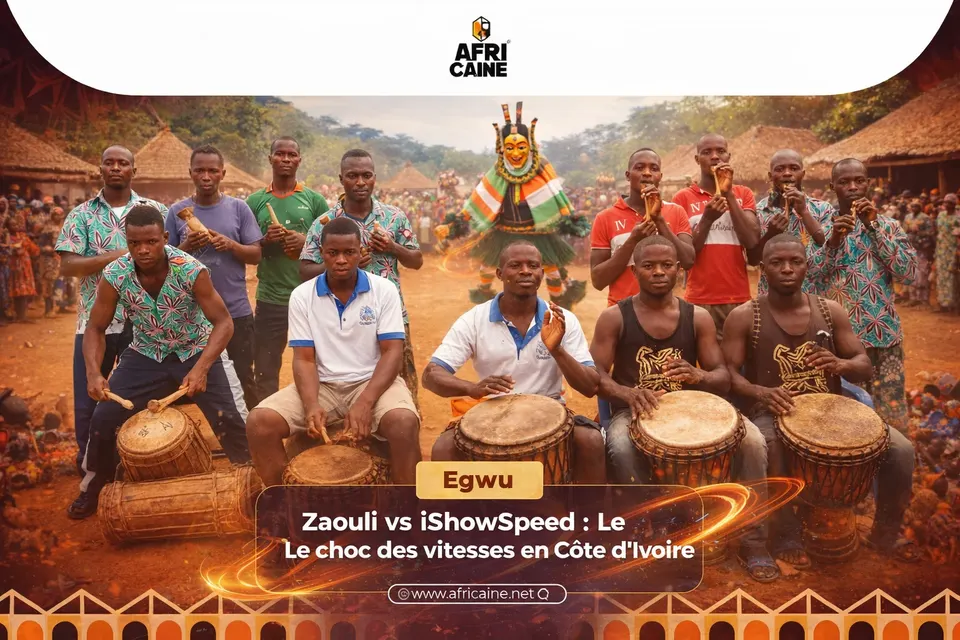
The orchestra traditionally consists of:
The master drum: Which dictates the changes of rhythm.
The Ahoko: A scraped percussion instrument (a fruit shell on a notched stick) that produces that shrill, hypnotic sound.
The flautist: He is the one who “calls” the dancer into the public square. The flute imitates the intonations of the Gouro language to sing the dancer’s praises.
5. The Sacred Soul of the Zaouli: Between Aesthetics and the Divine
While the dizzying speed of the Zaouli now fascinates the whole world, its true strength lies in its deep spiritual roots. Far more than mere festivity, this dance is a living bridge between the Gouro people and the invisible. According to tradition, it was a spirit that handed down the seven original masks, making every performance an encounter with the sacred. Although it celebrates an idealised feminine beauty, the mask is worn by initiated men who efface themselves to embody a protective spirit. Unlike masks that inspire fear, the Zaouli is a unifying force: it comes not to frighten but to heal, to bring harmony and to draw prosperity to the community. Whether it is invoked to honour an ancestor at prestigious funerals or to promote the fertility of the land, the Zaouli transforms the village arena into a ritual space where physical prowess becomes a prayer, a reminder that life and social cohesion are the community’s most precious possessions.
6. The Zaouli: The Mystical Ambassador of Ivorian Culture in the Digital Age
Inscribed in 2017 on UNESCO’s Representative List of the Intangible Cultural Heritage of Humanity, the Zaouli now reaches far beyond the borders of Gouro country. In 2026, seeing an American streamer with 50 million subscribers try his hand at this discipline proves that African authenticity is the new currency of the web. The Zaouli is living proof that one can be deeply traditional and still become an icon of global “pop” culture thanks to its unique visual complexity.
And what did you think?
Beyond the viral performance and the entertainment, IShowSpeed’s visit to Ivory Coast will have had the merit of turning the global spotlight on a treasure the Gouro have cherished for centuries. The Zaouli reminds us that the most impressive speed is not that of a fibre connection, but that of a living heritage that keeps on pulsing to the rhythm of the red earth.
In your view, did the Zaouli win this speed duel? Or do you think such traditions should stay away from the hubbub of social media to keep their mystery?
Tell us what you think in the comments and share this article to help Ivorian and African culture shine!
Pélagie BLEWUSSI