


Fuji: The Secret DNA of Afrobeat and the Art of the Nigerian Talking Drum
If Afrobeat rules the global charts today, it has a deep, hard-hitting and untameable root: Fuji. The Talking Drum


Fuji: The Secret DNA of Afrobeat and the Art of the Nigerian Talking Drum
The Rhythm That Never Sleeps
If Afrobeat rules the global charts today, it has a deep, hard-hitting and untameable root: Fuji. Born amid the buzz of Lagos’s working-class neighbourhoods in the late 1960s, Fuji is far more than a mere musical genre. It is a social mirror, a link between the sacred and the profane, and the symbol of a unique cultural resilience. But how did this rhythm, born of Muslim piety, become the banner of African “street cred” in 2026?
- Origins: From “Were” to the Fuji Throne
In the beginning there was Were: a vocal music used by young Yoruba Muslims to wake the faithful during Ramadan. It was the legendary Sikiru Ayinde Barrister who, in the late 1960s, revolutionised the style by adding complex percussion such as Sakara, Apala, Aro, Gudugudu… and naming it “Fuji”, inspired, so the story goes, by Mount Fuji in Japan, a symbol of greatness and splendour.
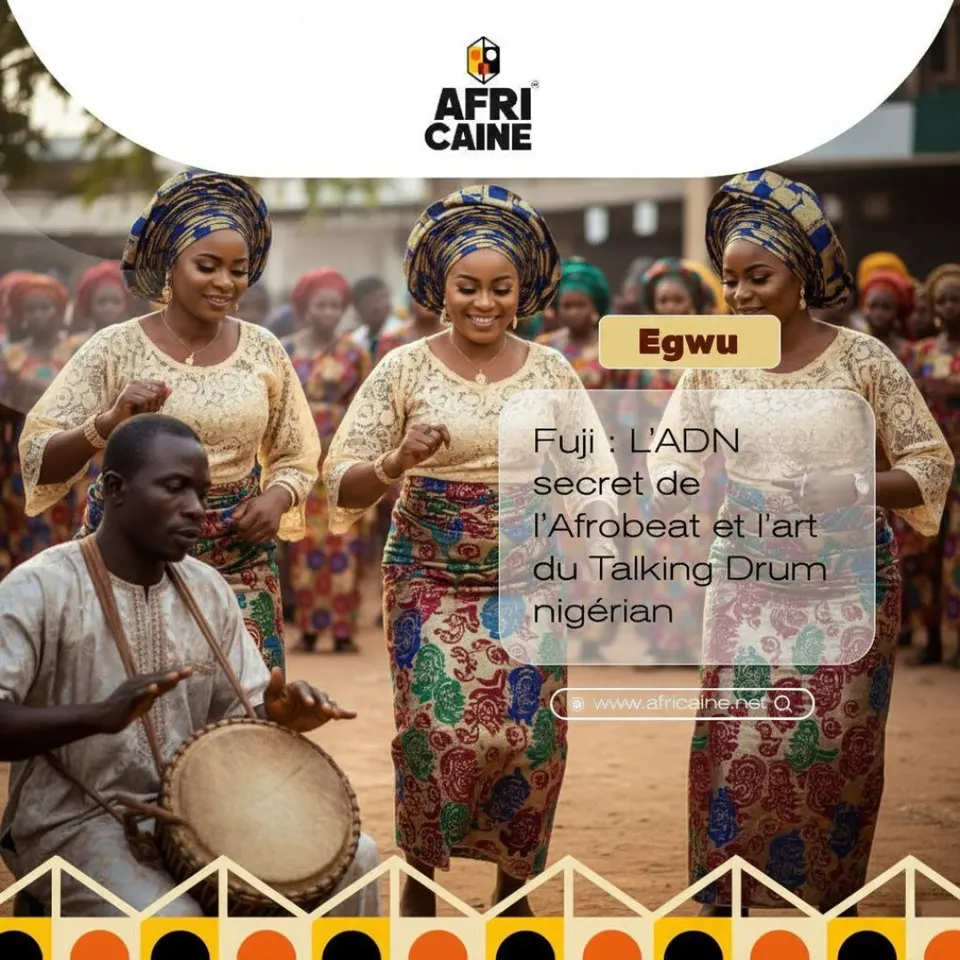
Unlike Jùjú, which used electric guitars, Fuji has remained faithful to the power of the Sakara, the Talking Drum (Gangan) and the Shekere. It is an organic music, a conversation between the skin of the drums and the singer’s voice.
The Dialogue of Skins: The Sound Engineering of Fuji
If Fuji is so captivating, it is because of its ability to create a trance without a single electronic instrument. It is a rhythmic architecture in which each percussion instrument fulfils a precise social and spiritual function.
The Gangan (The Talking Drum): The Master of Speech
The Gangan is the beating heart of Fuji. This hourglass drum does not merely keep the beat; it imitates the tones of the Yoruba language. In a master’s hands, it “speaks”, quotes proverbs and praises the guests. In 2026, this ability to communicate through sound remains one of the most sophisticated transmission technologies in the world. It is the equivalent of a portable oracle, able to change the energy of a room with a single squeeze under the armpit.
The Sakara: The Echo of Tradition
This round drum, made from fired clay and goatskin, gives Fuji its earthy, melancholic texture. Less nervy than the Gangan, the Sakara lays the foundation, recalling the genre’s ritual origins. It is what gives Fuji that depth you feel resonating in the pit of your stomach, creating a direct link with the ground and the ancestors.
The Akuba and the Clef: The Modern Pulse
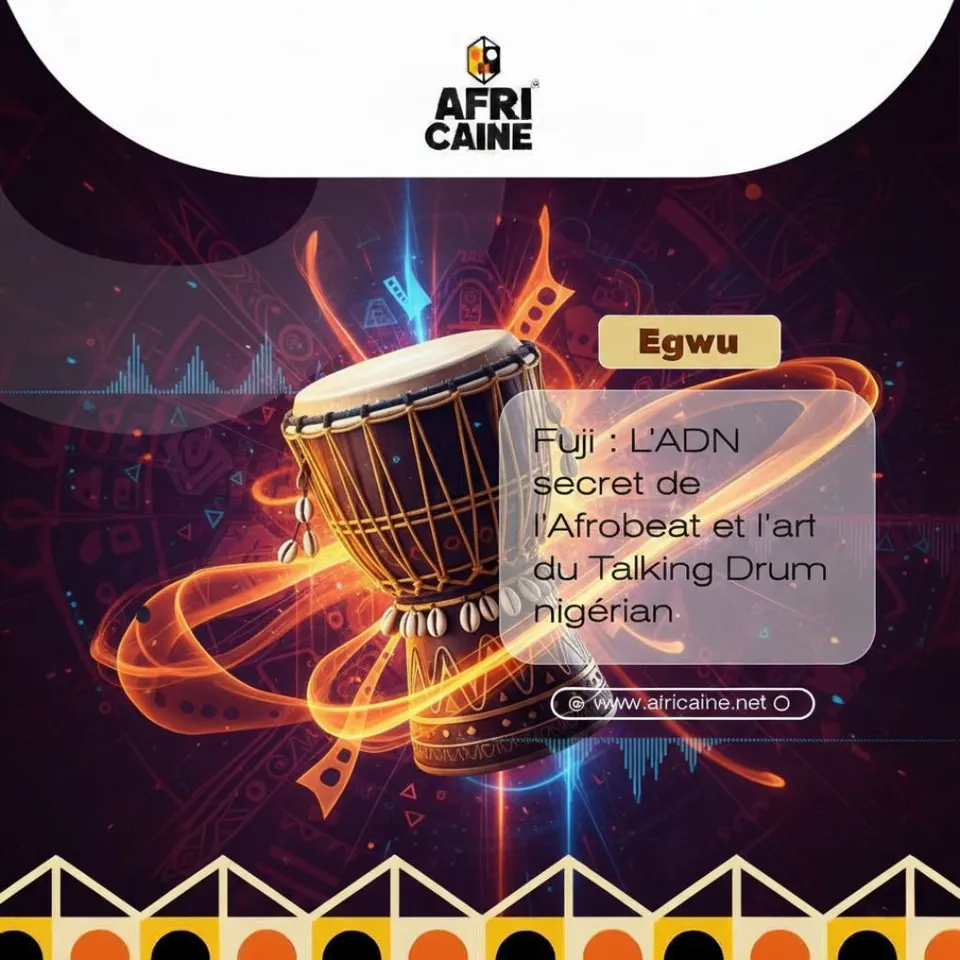
To give Fuji its “street”, danceable edge, sets of Akuba (local congas) add a fast percussive drive. They are often accompanied by the sharp strike of a metal bell or a wood block, which serves as an unshakeable metronome amid the rhythmic chaos.
The Shekere: The Sonic Adornment
This gourd covered with a net of beads or cowries brings the sparkle. The Shekere fills the space between the drumbeats, adding a layer of sophistication and festivity. In African symbolism, the cowrie is linked to prosperity; to hear the Shekere is to hear the call of abundance.
What makes Fuji “charismatic” in the purest sense is this absence of synthesisers. In an increasingly virtual world, Fuji stands out as an auditory luxury: the luxury of the organic, the real and handcrafted skill.
- Spiritual and Social Awakening: Fâ and the Spoken Word
Fuji is also the art of the spoken word. The lyrics are often packed with proverbs, praise and, more subtly, references to destiny. You find in it the same quest for clarity as in Ifa (Fâ): the singer becomes a modern griot who tells of daily struggles, dazzling successes and the mysteries of life.
“In Fuji, every drumbeat is a punctuation mark, every phrase is an oracle.” (Fuji: The Secret DNA of Afrobeat and the Art of the Nigerian Talking Drum)
- Game of Thrones: The Energy of the Street
The history of Fuji is marked by legendary rivalries (Barrister vs Kollington, or more recently Pasuma vs Saheed Osupa). These “clashes” are not conflicts but a driving force that pushes artists towards excellence. This creative swagger is what gives Fuji its charismatic, provocative character.
- 2026: Fuji Is the New Cool
Today, Fuji is merging with electro, hip-hop and pop. Artists such as Wizkid, Burna Boy, Asake no longer hide the influence of Fuji melismas in their voices. Fuji has become an aesthetic:
- Fashion: The return of the XXL Agbada worn with trainers.
- Language: Lagos slang, carried by Fuji, is becoming the language of global African youth.
- Economy: “Aiye” weddings and celebrations are only complete with a Fuji band, a symbol of social status. An Unshakeable Foundation

Like a timeless musical witness, Fuji stands the test of time. It does not adapt to the world; the world ends up tuning itself to its tempo. To listen to Fuji is to reconnect with a raw energy, a strength of character that refuses to apologise for existing.
Pélagie BLEWUSSI