


From Egypt to Ghana: The Ancestors’ Code in Enam’s AMIN!
When Music Becomes Ritual! Dear sons and daughters of Africa, Mia woezon to Egwu, our space devoted to the rhythms, melodies…

When Music Becomes Ritual!
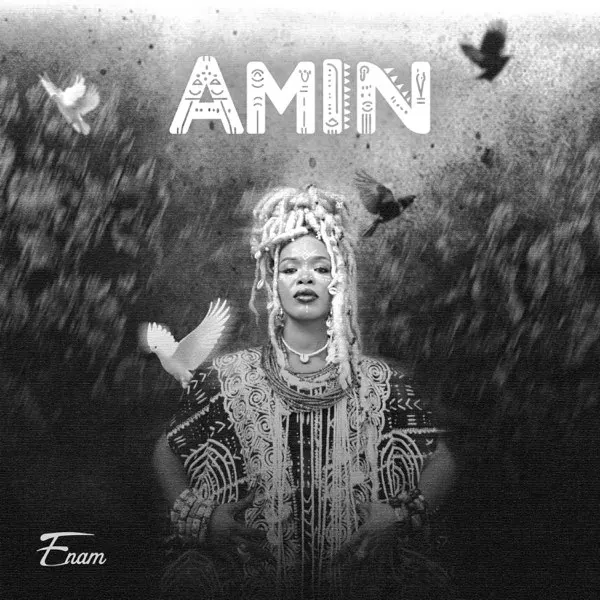
Dear sons and daughters of Africa, Mia woezon to Egwu, our space devoted to the rhythms, melodies and performances that set the soul of Africa vibrating. Today we invite you to inhabit a sound that transcends entertainment: “AMIN” by the Ghanaian artist Enam.
AMIN is a ritual film, a sonic catharsis in which Afro-spiritual music becomes a sacred bridge between the visible and the invisible worlds. Enam, a pioneer of the genre, offers us a song of liberation and faith whose power lies in its direct call to the unseen forces and to ancestral wisdom. The title “Amin” means “So be it”, signalling that the song is at once a prayer and a performance.
The Echo of Origins: A Song of Affirmation and Resilience
The title itself, “AMIN”, is a powerful affirmation meaning, in the EWE language (and in many other traditions): “So be it”. It sets the tone: the song is an incantation, an act of will cast out into the universe.
The artist Enam, who hails from the Volta Region of Ghana, carries in her voice the power and melody of the Ewe language. Spoken by nearly twenty million people across Ghana, Togo (where it is a major language) and Benin, Ewe is a linguistic treasure of West Africa. In Ewe, every word is rich in tones, which gives the song an intrinsic melody and an emotional depth that amplify its spiritual message. Singing in Ewe is not merely a linguistic choice; it is an act of rooting, ensuring that the call to the Ancestors (Mamawo and Togbuiwo) resonates with the authenticity and strength handed down by this beautiful, powerful language of the region.
Enam orchestrates a poignant prayer that belongs to the Afro-spiritual genre. The song is a spiritually rooted affirmation of confirmation and resilience, explicitly invoking the guardians of Africa’s heritage.
- She calls on the female Ancestors (Mamawo) and the male Ancestors (Togbuiwo) to grant grace, wealth and safety at every step: “May sustaining grace come upon us, that our eyes may see wealth. For each step we take, may you secure our feet firmly, so we may not stumble. Drive away all illness.”
- The song is a shield against adversity. It asks for enemies to be blinded (“Gba nku na futôwo”) and affirms that all pain will pass: “Blind our enemies (Gba nku na futôwo). May hostility never seek us and find. Only Good news we shall hear. All pains shall pass away.”
- She celebrates liberation and renewal: “Now we have come into ourselves indeed. We have found our traditions and the secret of the herbs.” It is a hymn to resilience, declaring that “Curses will turn into blessings. The Great God will hear your prayer. You will also be a winner.”
The Symbolic Setting: A Ritual Film at the Source of Black Spirituality
The brilliance of this work lies in the perfect harmony between sound and image. The music video is not mere staging; it is a cinematic ritual that immerses the viewer in a sacred space, encoded with the fundamental symbols of West African spirituality.
The artist invites us into the heart of Nature, the stage on which we meet the divine. The video was shot at a waterfall and in a forest, the dwelling place of spirits. The spring water and the rushing current of the falls are not just a backdrop; they symbolise purification, life and the ceaseless flow of spiritual energy that is essential to all healing and renewal.
The Echo of Kemet and the Armour of Purity
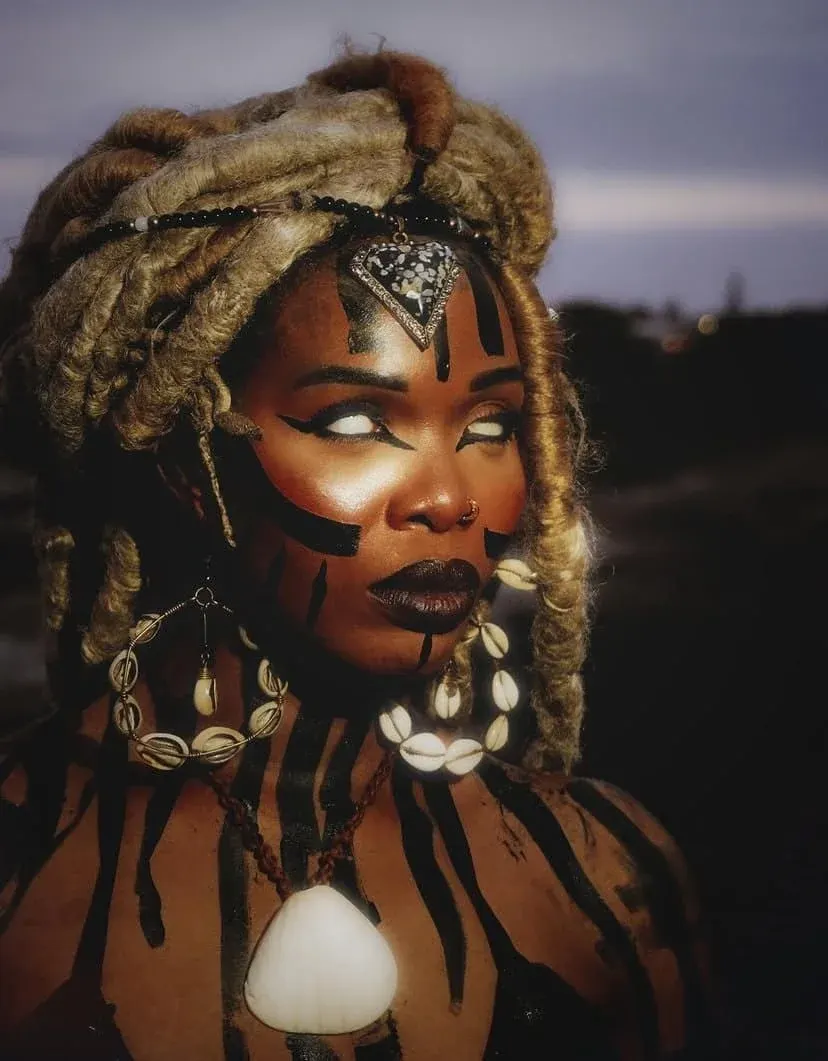
The artist, Enam, presents herself as an initiate, a keeper of mysteries. Her face bears a powerful symbolic design: the Eye of Horus (Houjat). This symbol from ancient Egypt, the wellspring of Black heritage, stands for wholeness, healing and protection. By wearing the Houjat, Enam places her quest for spiritual renewal within a lineage thousands of years old. Dressed in black and gold (black for fertile earth and transformation, gold for light, the sacred and prosperity), she dances in the living water, immersing herself and reaffirming her role as a channel between the human and the divine.
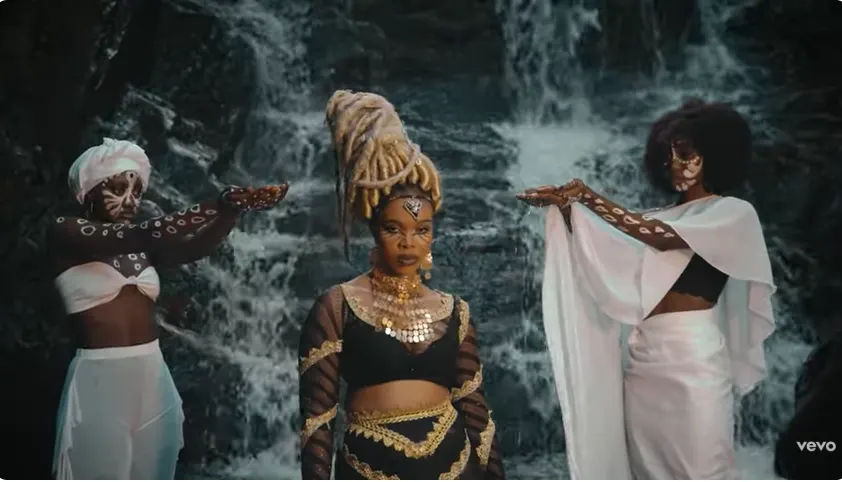
The two dancers who accompany her embody ritual purity. Their bodies are coated in white clay, and the immaculate white of their cloth is one of the ritual garments worn by the custodians of West Africa’s spiritual heritage. The symbols drawn on their bodies represent codes of protection and transmission. The trance scenes they perform, echoing Enam’s fervour, are not mere agitation but acts of transcendence: movement is the vehicle by which the prayer rises, enabling transcendence and welcoming the presence of the ancestors.
The Mask and the Root of the World
The video reaches its climax in the epilogue. The presence of a bearer of an ancestral mask acts as a seal, a validation of the spirituality being invoked. The mask is not a disguise; it is the temporary embodiment of the spirit of the past, the bridge between generations. She stands at the foot of a sturdy, majestic tree. In African cosmogony, the tree is the Axis of the World, the root that binds the sky, the earth and the underground realm of the dead. Positioned in this way, the ancestral mask affirms the permanence of the heritage and the legitimacy of the knowledge Enam has rediscovered.
This elaborate iconography makes “AMIN” not only a musical work but a deeply initiatory one.
A Call to Spiritual Freedom
“AMIN” is a powerful reminder that African music, in its most authentic form, is an act of spirituality. Enam invites us to untie ourselves from the “knots of evil plot” and to find our own way back to calm (Bôkôr) and peace of mind. The experience is described as a spiritual bath meant to break chains and call the soul back to freedom.
As the mysterious voice echoes: “shall your path be straightened, shall your body be full of life… peace of mind be with you.”
AMIN!
Pélagie BLEWUSSI