


Kwanzaa: A Celebration of Black Excellence and Identity!
Kwanzaa: a celebration of Black excellence and identity. More than a holiday, a return to the roots and a celebration of African excellence!

Kwanzaa: More than a Holiday, a Return to the Roots and a Celebration of African Excellence!
As the December lights twinkle all over the world, a unique celebration takes place across the African diaspora, chiefly in the United States, Canada, Europe and Brazil: Kwanzaa. Far from being a substitute for religious holidays, Kwanzaa is a major cultural event. From 26 December to 1 January, it is not about presents or Father Christmas, but about a profound quest for connection with the ancestors and with the values that give the Black community its strength.
The Roots and Deeper Meaning of Kwanzaa
Kwanzaa was created in 1966 by Dr Maulana Karenga, an African American professor and activist. It is not an ancient festival but a tradition invented to fill a cultural and spiritual void among the descendants of enslaved people, who had been cut off from their original ties with the African continent.
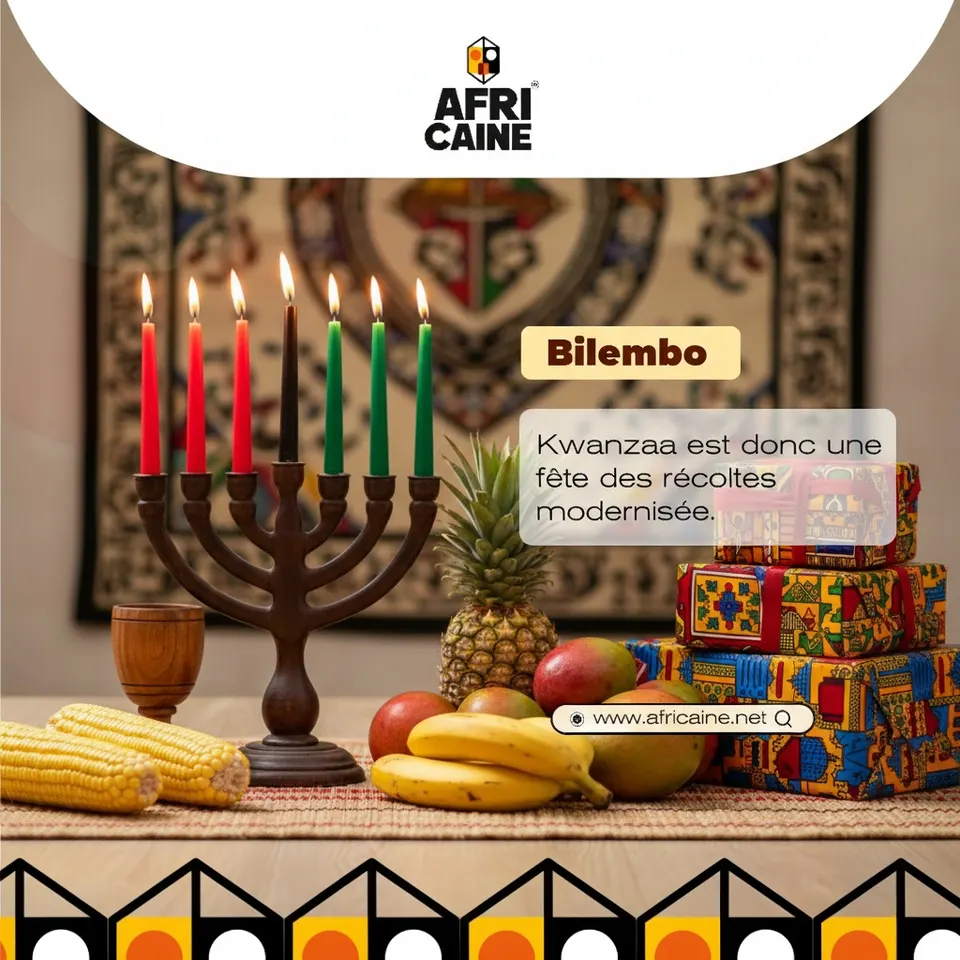
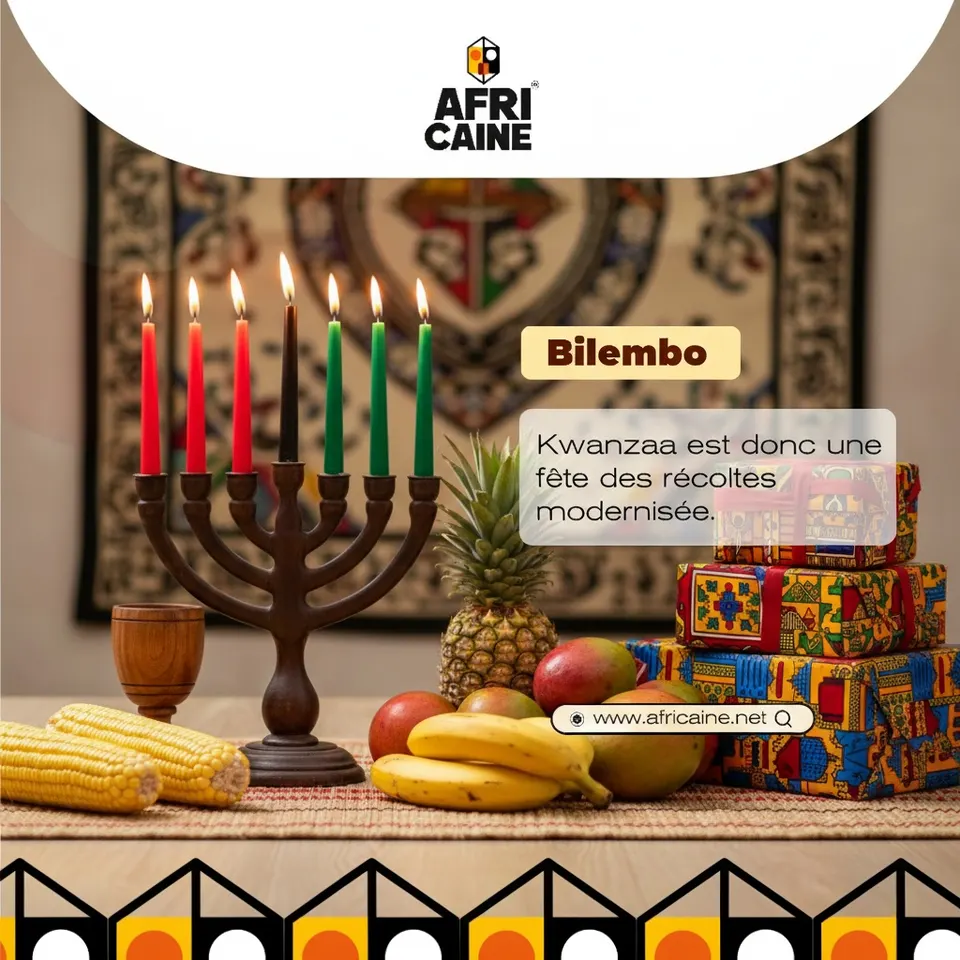
Its name comes from the Swahili expression “matunda ya kwanza”, meaning “first fruits”. Kwanzaa is therefore a modernised harvest festival (traditionally celebrated in Africa), centred on rebuilding identity, unity and self-determination. Still in the spirit of forging a special bond with the ancestors, an extra “a” was added to Kwanzaa to make it distinctive and to give it seven letters, matching the seven days of the festival and its seven principles.
7 Days, 7 Principles: The Heart of the Celebration (Nguzo Saba)
The celebration spans seven days, each devoted to one of the seven founding principles known as the Nguzo Saba (seven pillars in Swahili). They form the community’s true programme of action and spiritual uplift:
The festival begins on 26 December with the call to Umoja (Unity), an invitation to foster cohesion within the family, the community and the race. The next day, 27 December, is dedicated to Kujichagulia (Self-Determination), encouraging people to define themselves, name themselves and speak for themselves.
Then comes community work with Ujima (Collective Work and Responsibility) on 28 December, which stresses building and maintaining the community. This principle is followed by Ujamaa (Cooperative Economics) on 29 December, which aims to build and sustain our own businesses for mutual profit.
The final days look towards the future and to faith. 30 December is devoted to Nia (Purpose), the mission of making the community greater and more beautiful than the one we inherited. 31 December honours Kuumba (Creativity), a reminder that we must always do as much as we can to enrich our heritage and make it beneficial. Finally, on 1 January, the festival closes with Imani (Faith): believing wholeheartedly in our people, our parents, our teachers and our leaders.
Practice and Symbols: How Is Kwanzaa Celebrated?
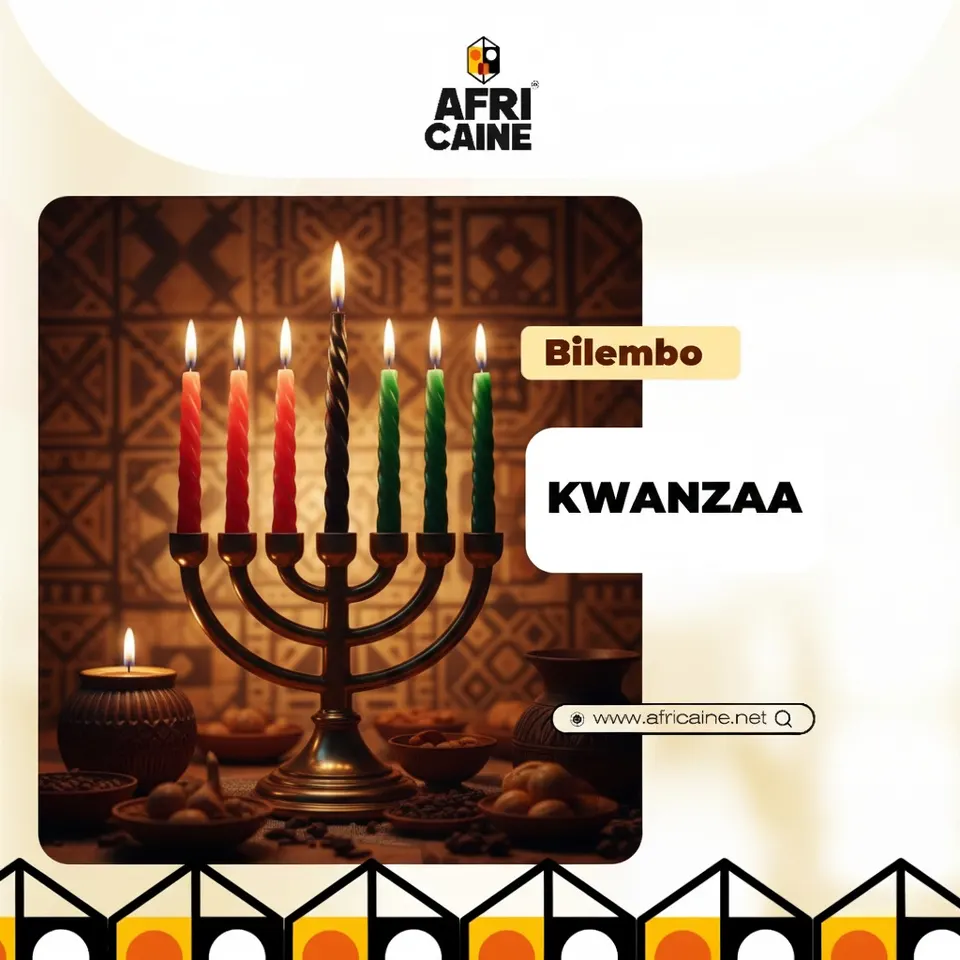
The celebration revolves around the Kinara (the candleholder) and the festival’s seven symbols, all laid out on an African mat (Mkeka).
The Seven Symbols (Vibunzi)
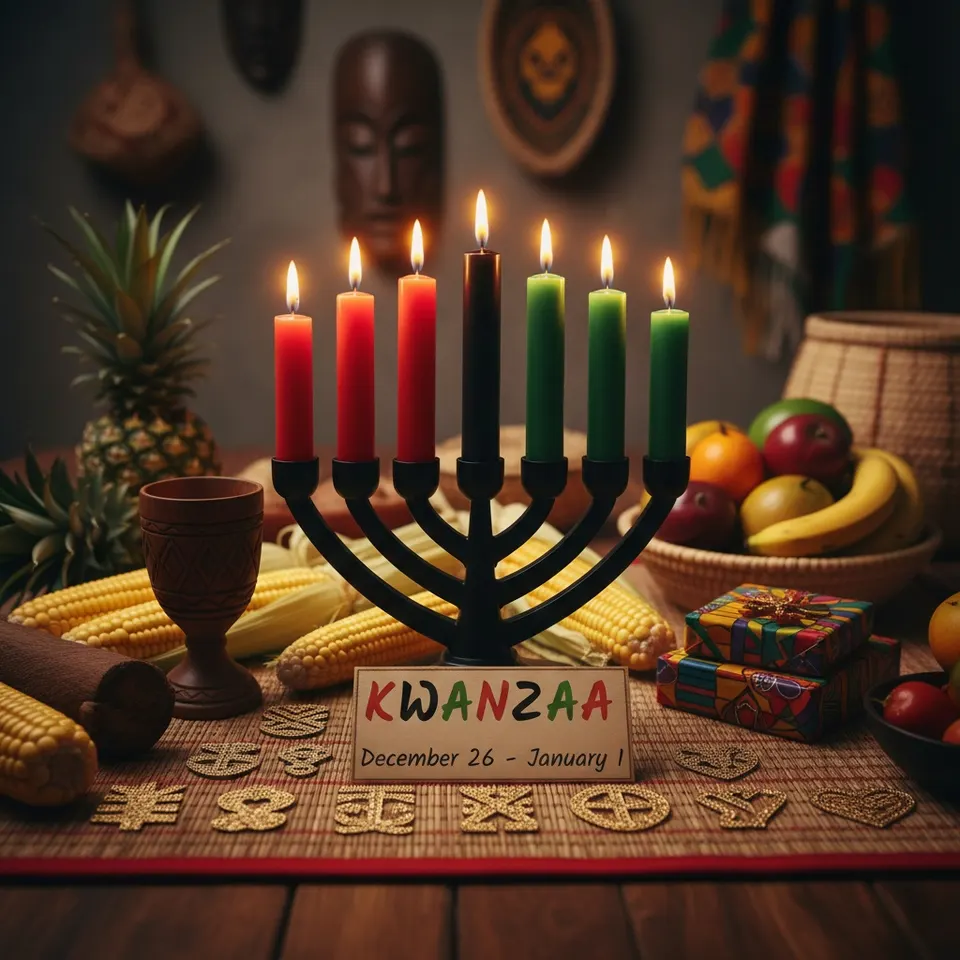
Mkeka (The Mat): Symbolises the historical foundations, tradition and the base of the community.
Kinara (The Candleholder): Represents the roots, the African people as a whole. It holds seven candles (Mishumaa Saba).
Mishumaa Saba (The Seven Candles): One black in the centre (Unity), three red on the left (the struggle) and three green on the right (hope and the future). One candle is lit each evening.
Muhindi (The Ear of Corn): Represents children and the future. One ear is set out for each child in the family.
Kikombe cha Umoja (The Unity Cup): Used for the libation ceremony in honour of the ancestors (the Tambiko).
Zawadi (The Gifts): Given to the children on the last day. They should be homemade or bought from a Black-owned business to promote Ujamaa.
Mazao (The Fruits): The produce of the harvest, symbolising work and its reward.
The high point is the great feast of unity (Karamu), held on New Year’s Eve, 31 December. It is a large communal meal where African and African American dishes take pride of place. There are songs, dances, accounts of family lineages and libations, recalling the principle of Umoja.
A Festival of Connection for Africa and Its Diaspora
Kwanzaa is not merely a series of rituals; it is a commitment. By focusing on the principles of collective work, cooperative economics and self-determination (Kujichagulia), this celebration offers a concrete framework for turning a legacy of suffering into a legacy of excellence.
It reminds Africans on the continent and in the diaspora that true wealth lies in unity and the ability to build together. Kwanzaa is tangible proof of a culture that, despite being uprooted, has managed to reinvent itself to celebrate its strength and to prepare a future grounded in the wisdom of its female and male ancestors.
Pélagie BLEWUSSI