


The Inaugural Editorial
The air is alive today with a special energy, a warmth matched only by that of our eternal suns. At this moment…

By Africaine editorial team
· 3 min read

The Soul of Africa: Discover the Rich Diversity of Africaine.net!
The air is alive today with a special energy, a warmth matched only by that of our eternal suns.
At this very moment, we are unveiling Africaine.net, the platform we have dreamt of, built and conceived as the ultimate crossroads of African culture in all its fascinating diversity and boundless vastness.
This is the launch of a majestic adventure, worthy of the continent that saw us born and grow up: the Cradle of Humanity.
Our slogan, “Africaine, the Soul of Africa”, is a deeply rooted motto; it is a promise, a commitment, a declaration of love. For it is this profound, rich and often little-known soul that we wish to celebrate, explore and share with the world.
For me, having taken my first steps as a journalist with my heart beating for culture, the birth of this crossroads is both a culmination and a springboard. I have always been convinced that the truest mirror of a people is its cultural expression. It is in our tales, our rhythms, our colours, our flavours and our ways of living and interacting that our inexhaustible strength lies!
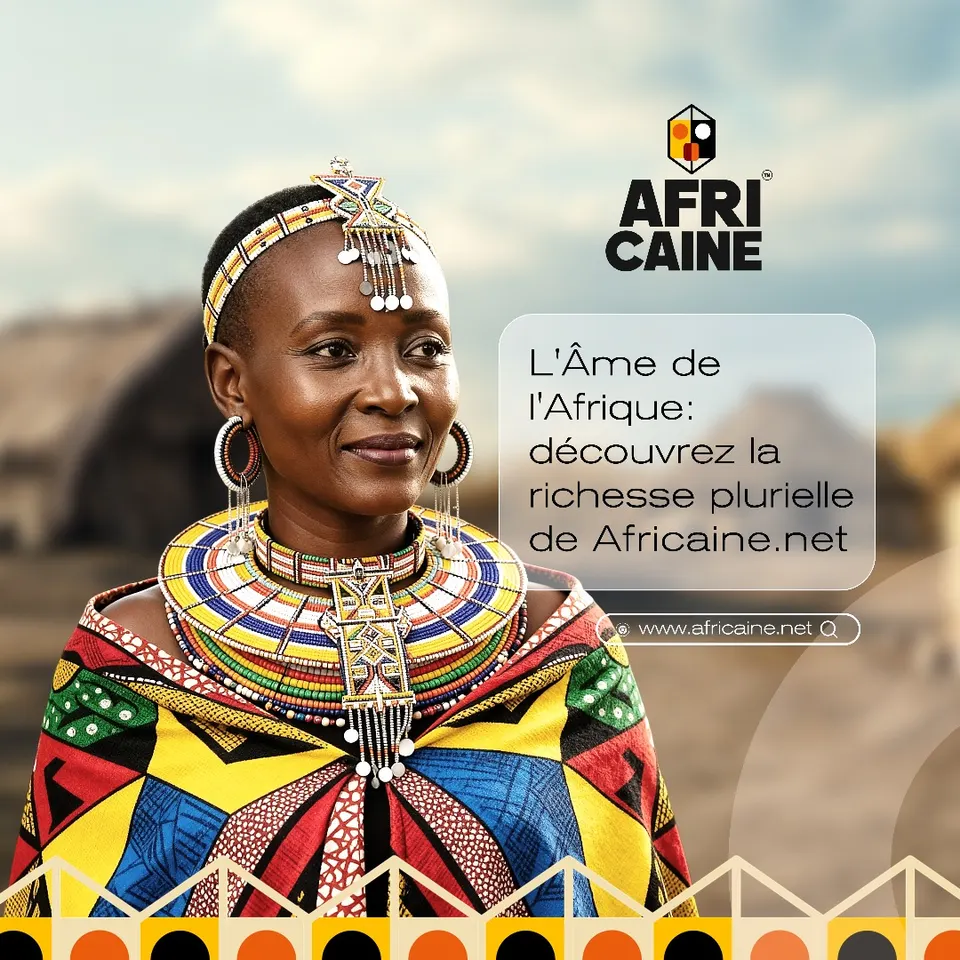
Africa is not a monolithic block, but a dazzling mosaic of peoples, languages, spiritualities and wisdoms. To grasp the essence of this continent, each facet of its genius needed a name, a resonance. That is why Africaine.net will be organised around sections that carry within them both history and the future, weaving together the threads of our identity:
We will journey through the creative and aesthetic world with Architecture (Xôtata, the Ewe word for the art of designing dwellings), exploring the structures that tell our memories. We will be swept away by dance and sound with Music, Dance and Performing Arts (Egwu, meaning “dance” or “song” in Igbo), celebrating the rhythms that unite our bodies and minds.
Elegance will take pride of place in Fashion&Beauty (Aṣọ-Ewà, the union of style and beauty in Yoruba), while the art of the image will flourish in Cinema and Photography (Sini, film in Akan). We will pay tribute to creative hands in Crafts and Visual Arts (Sanaa, arts in Swahili), and explore the art of arranging space in Decoration (Kawa, ornaments in Hausa).
But the African soul is also perceived through our senses and our traditions. We will discover the world of scent with Fragrance (Ur, smell in Somali), feel the deep roots of our peoples in Tradition (Isiko, custom or tradition in Zulu), and decipher ancestral codes with Symbols and Principles (Bilembo, symbols in Lingala, which bind us to our culture).